Microplastics in our Food Systems
When we throw a plastic bottle in the bin, we tend to think it is gone forever. But plastic is different from an apple core or a piece of paper. It does not rot or turn back into soil.
Instead, plastic does something called fragmentation, imagine smashing a dinner plate: it doesn't disappear; it just turns into smaller and smaller shards. Sunlight, waves, and friction break plastic down until the plastic pieces are so small they become invisible. These tiny particles end up in our soil, our water, and eventually, on our plates.
In this lesson, we will learn what these particles are, how they get into your food, and what you can do right now to keep them out of your body.
What Exactly Are Microplastics?
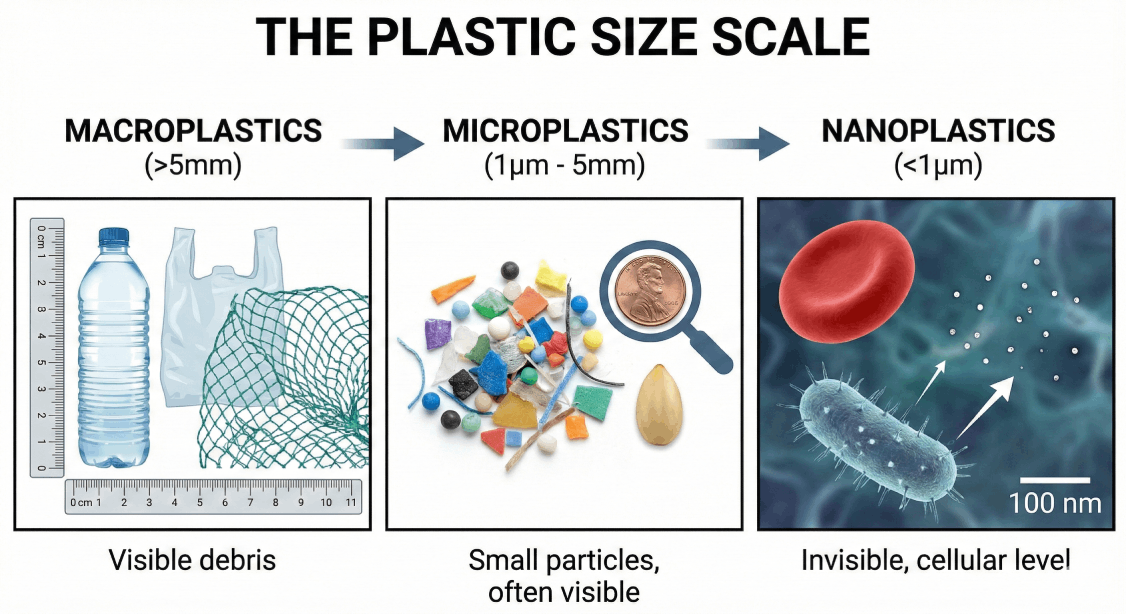
To understand the risk, we need to look at size.
- Macroplastics: The big stuff you can see (bottles, bags).
- Microplastics: Pieces smaller than a sesame seed (5mm). These can be found in various food items like seafood.
- Nanoplastics: Particles so small you would need a powerful microscope to see them. These are the most concerning because they are small enough to potentially pass through your gut lining and enter your bloodstream.
Where do they come from?
Sometimes they are made small on purpose (like "microbeads" in old face scrubs). But mostly, they come from big things breaking down over time, like a synthetic sweater shedding tiny fibers in the washing machine, or a water bottle degrading in the ocean.
How Do We Eat Them?
There are two main ways plastic ends up in your stomach: The Ocean Route and The Kitchen Route.
The Ocean Route (The Food Chain)
In the ocean, tiny drifting animals (plankton) mistake microplastics for food and ingest them. Small fish eat the plankton, and big fish eat the small fish.
- The Accumulation: Unlike food, plastic doesn't digest. It sits in the fish's stomach.
- The Risk: When you eat whole seafood, like mussels, oysters, or sardines, you are eating the creature's digestive tract, which may contain these plastic particles.
Together with whole seafood, sea salt is one of the highest concentrated sources of plastic in human diet.
The Kitchen Route (Heat and Plastic)
This is the exposure you can control directly.
- Heat is the Enemy: Plastic is not stable when it gets hot. If you put a plastic container in the microwave (even those that are microwave safe!!), the heat causes the material to expand and release tiny plastic particles directly into your leftovers.
- Wear and Tear: Every time you scrub an old plastic container or slice on a plastic cutting board, you are creating microscopic scratches. These scratches shed plastic bits straight into your food over time.
The "Sponge Effect"
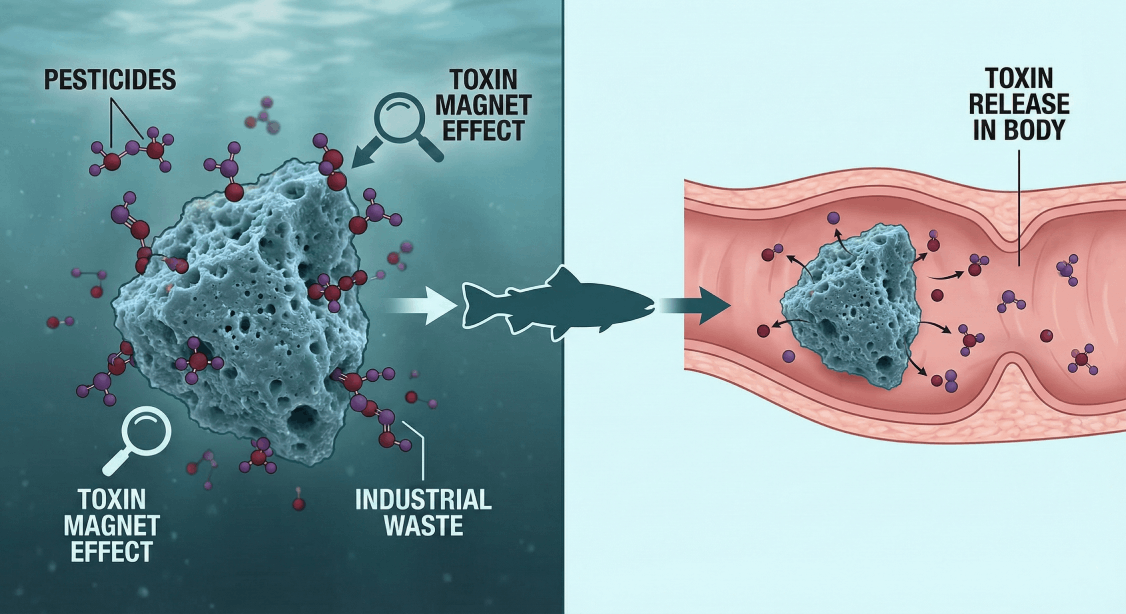
Why is eating a tiny piece of plastic bad for you? It's not just the plastic itself, but it is also what the plastic carries, or what scientists call the sponge or trojan horse effect.
Think of a microplastic particle floating in the ocean or a river like a small sponge. It acts like a magnet for other toxins in the water, such as pesticides and industrial waste. The reason for this is that microplastics often repel water, while attracting fats and oils. This causes toxins to stick the surface of the plastic. When a fish (or a human) swallows that particle, those concentrated toxins can be released into the body.
Practical Tips: How to Reduce Your Intake
You cannot avoid all microplastics, but you can significantly reduce the amount you eat by changing a few habits in the kitchen.
1. Never Microwave Plastic
This is the #1 rule. Even if a container says "Microwave Safe," that just means the container won't melt, but it doesn't mean it won't leach chemicals or particles. To be safe, transfer food to a ceramic bowl or glass plate before heating.
2. Retiring the Plastic Cutting Board
Chopping vegetables on a plastic board creates thousands of micro-grooves. Where does that plastic go? Into your salad. It's better to use a wooden or bamboo cutting board. Wood creates far fewer loose particles, and wood fibers are natural and harmless if ingested.
3. Filter Your Tap Water
Tap water is generally safe, but it can pick up microplastic fibers from PVC pipes or the environment. A simple carbon block filter (like a pitcher filter or fridge filter) is effective at catching larger microplastic particles.
4. Watch Your Tea Bags
Many "fancy" pyramid-shaped tea bags are actually made of plastic mesh (nylon or PET). Steeping them in boiling water can release microplastics into your cup. Use loose-leaf tea with a metal strainer, or check the box to ensure tea bags are made of paper and are compostable.
5. Ditch the Plastic Kettle
Boiling water in a plastic electric kettle degrades the plastic over time, shedding particles into your hot water. Switch to a stainless steel or glass electric kettle to eliminate this risk.