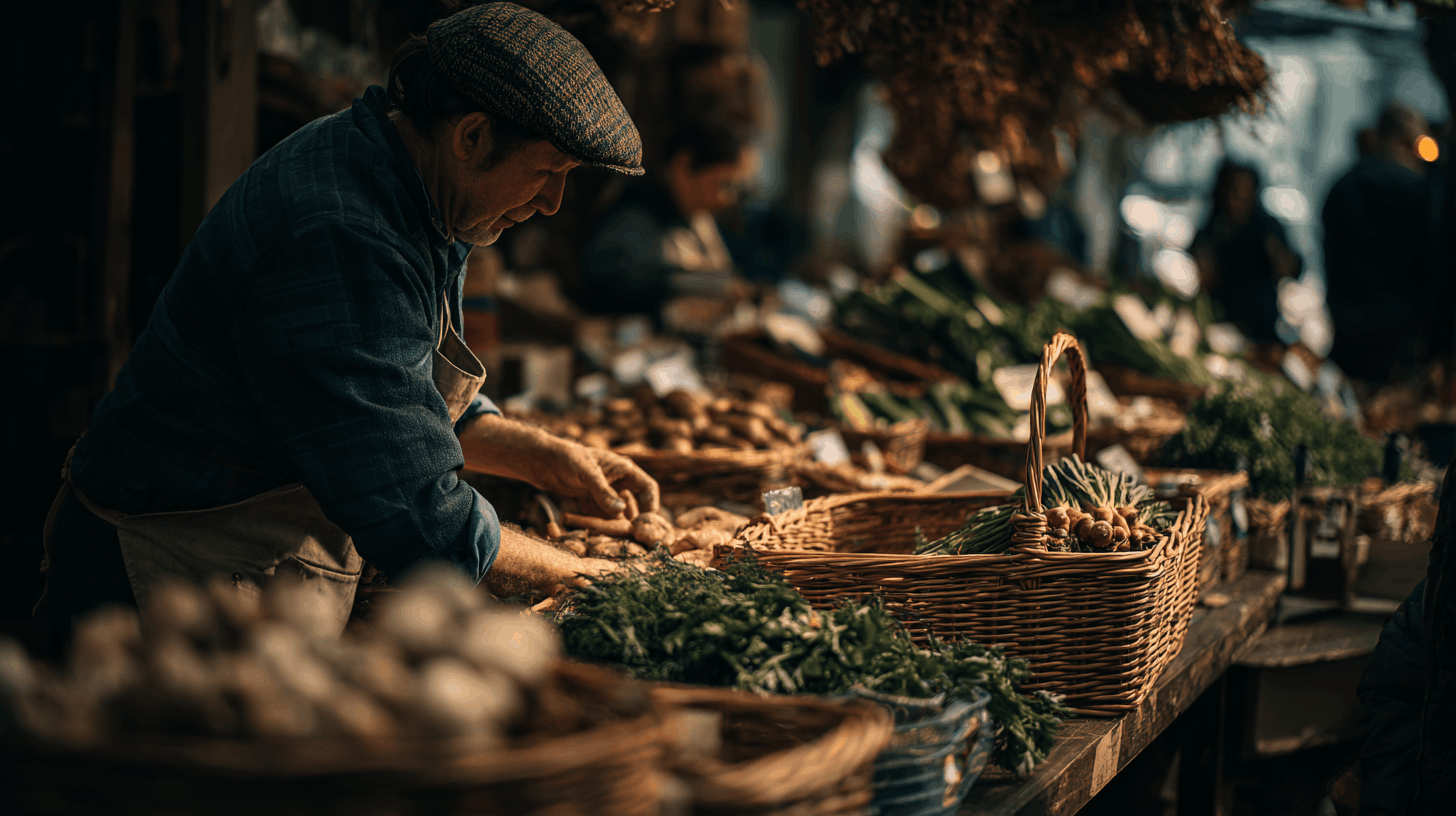
Mastering Seasonal and Local Food
 Good Health And Well-Being
 Zero Hunger
 Responsible Consumption
Explore the biological, economic, and ecological impacts of eating with the seasons to build a more resilient and sustainable food future.
In a world of globalized supermarkets, we have become disconnected from the natural cycles of food production. This challenge dives deep into the geography of food, the systems thinking required to sustain local economies, and the practical skills needed to navigate modern dietary choices.
By understanding how food miles, biodiversity, and seasonal phenology intersect, you will learn to make food choices that support both planetary health and community resilience.
Learning Goals
The Geography of Food
The Geography of Food explores the intersection of biology and logistics. We begin by looking at phenology, the study of cyclic and seasonal natural phenomena. Understanding when plants naturally fruit and ripen is the first step toward seasonal literacy. Following this, we examine the physical journey food takes from farm to fork. In a globalized economy, the logistics of longevity allow us to eat fresh produce year-round, but this convenience comes with a hidden cost.
Phenology and the Farmer's Calendar
Food Miles and the Logistics of Longevity
Systems Thinking in Agriculture
When you choose a local apple over an imported one, you are participating in a complex web of systems thinking. This module explores how your individual food choices ripple through the environment and the economy. We look at agrobiodiversity, the variety of life found in our farming systems, and how local markets keep rare, resilient plant species alive. We also analyze the economic multiplier effect, showing how keeping money within a local food loop creates jobs and stability.
By the end of these lessons, you will see your local farmer not just as a food provider, but as a key architect of a sustainable future.
Biodiversity and Varietal Resilience
The Multiplier Effect of Local Economies
Practical Agency and Dietary Literacy
Now that you understand the systems behind our food, it is time to build your own practical agency. This module moves from the 'why' to the 'how.' You will learn how to bridge the gap between seasonal abundance and winter scarcity using traditional culinary literacy.
We also tackle the modern marketplace, giving you the critical thinking skills to decode labels and spot greenwashing in the supermarket aisles. By the end, you will have a personal toolkit for eating in a way that aligns with your values and your regional environment.