Biodiversity and Varietal Resilience
Learn how local food systems protect plant diversity and why 'ugly' or 'weird' heritage vegetables are essential for a climate-resilient future.
Why Your Salad Needs More Variety
The Supermarket Monoculture
Have you ever noticed that every grocery store seems to sell the exact same three types of apples? Whether you are in London, New York, or Tokyo, the 'Red Delicious' or 'Gala' is always there. This is what we call a monoculture, a system where only a few varieties are grown because they are easy to ship and store.
While this is convenient for global shipping, it creates a massive risk for our food system. If a single pest or disease evolves to target that one specific apple variety, it could wipe out a huge portion of the world's supply. By relying on just a handful of crops, we are putting all our 'food eggs' in one basket.
The Power of Heritage Varieties
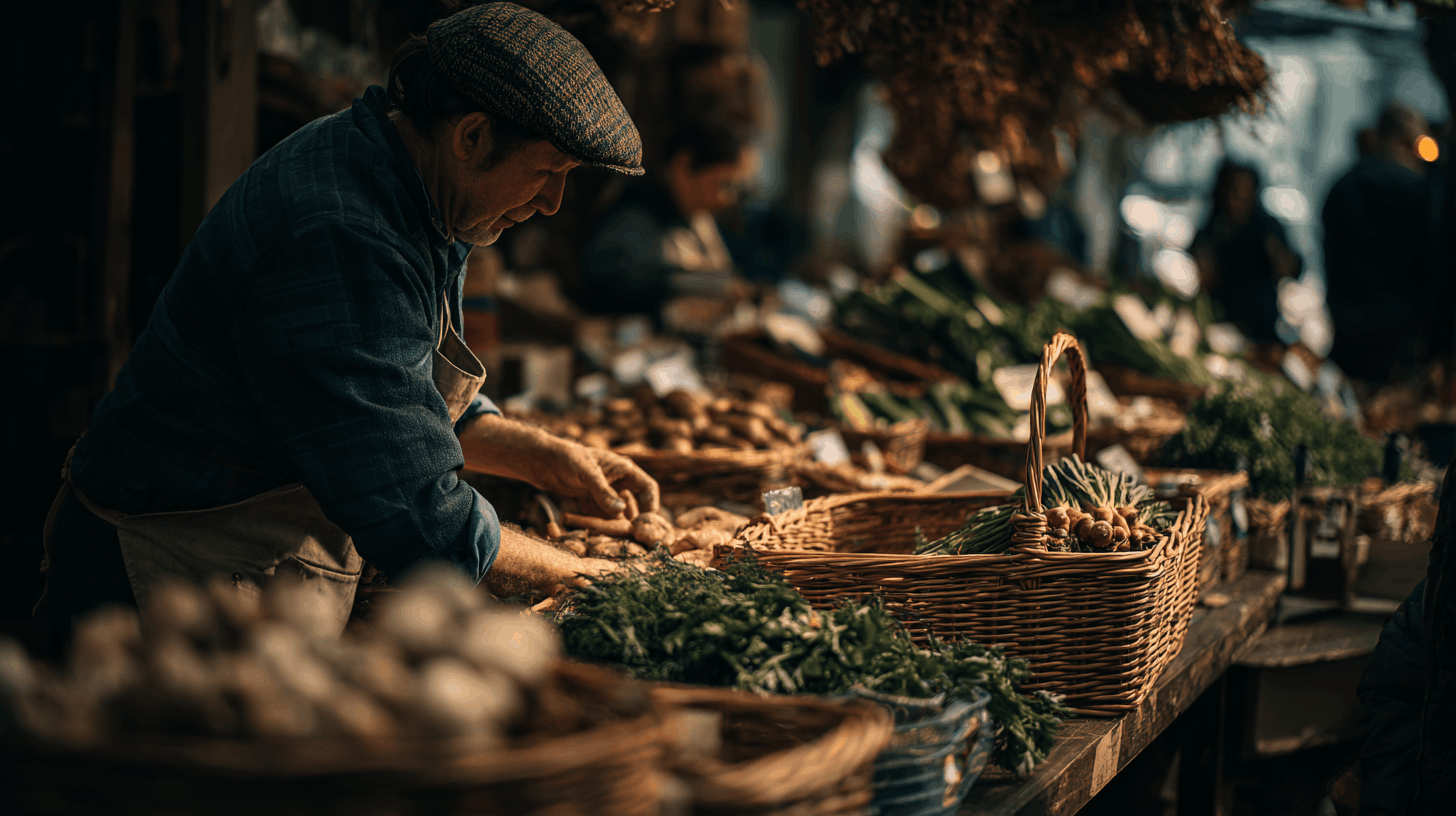
When you visit a local farmer's market, you might see tomatoes that are striped, lumpy, or deep purple. These are often heirloom or heritage varieties. These plants have been passed down for generations because they taste great and are adapted to specific local soils and climates.
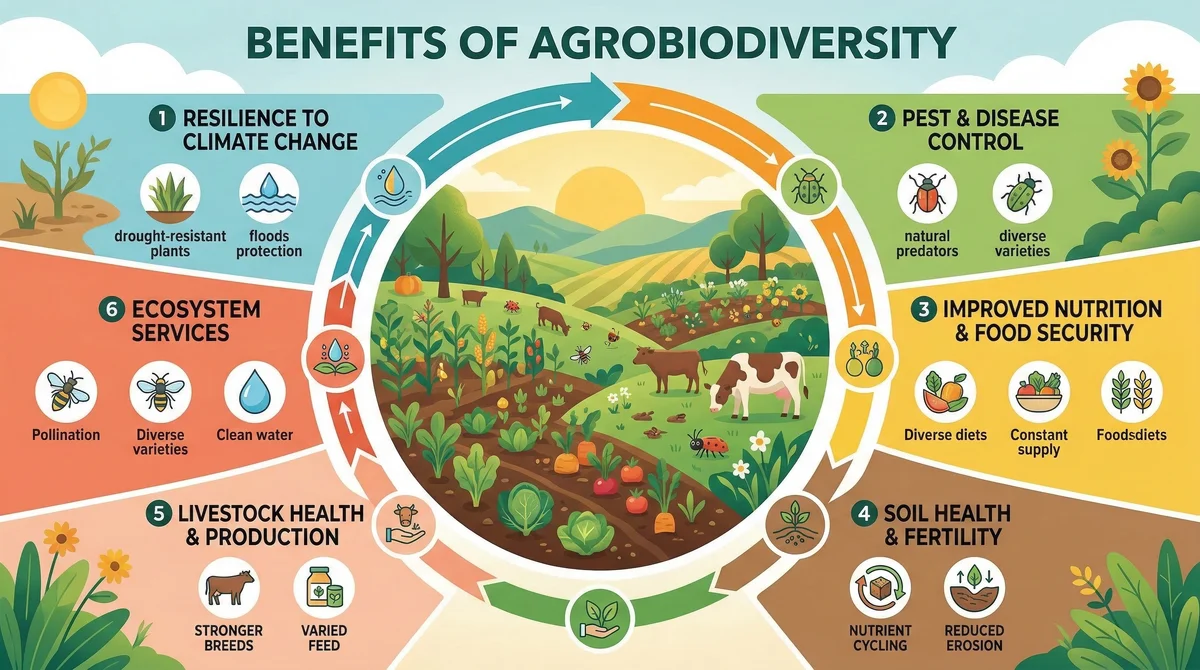
These unique varieties are the secret weapon of agrobiodiversity. Here is why they matter to you and the planet:
- Genetic Resilience: A diverse field of different plant varieties is much more likely to survive a heatwave or a new bug than a field of identical clones.
- Ecosystem Services: Local, diverse farms provide better habitats for pollinators like bees and butterflies, which are essential for 75% of our food crops.
- Nutritional Diversity: Different colors in vegetables often represent different phytonutrients; eating variety isn't just pretty, it is healthier for you.
Systems Thinking: From Seed to Climate
Think of biodiversity as an insurance policy for the Earth. In a changing climate, we don't know which plants will thrive 50 years from now. By eating locally and choosing diverse varieties, you are essentially helping farmers keep a 'living seed bank' in the ground.
Every time you buy a 'weird' lumpy carrot or a purple potato, you are providing the economic demand that allows a farmer to keep growing that variety. This keeps the gene pool wide and ensures that we have the biological tools to adapt to future environmental shifts. You aren't just buying dinner; you are protecting the future of farming.
Take Action: Embrace the Unusual
You can start building a more resilient system this week! Next time you shop, look for a vegetable or fruit variety you have never tried before, especially if it looks a bit 'imperfect' or unusual. Seek out Community Supported Agriculture (CSA) boxes, which often include heritage seeds that supermarkets reject. Your curiosity is a powerful tool for conservation.