Designing a Circular Future
Explores the roles of government and industry in solving the plastic crisis through policy and circular product design.
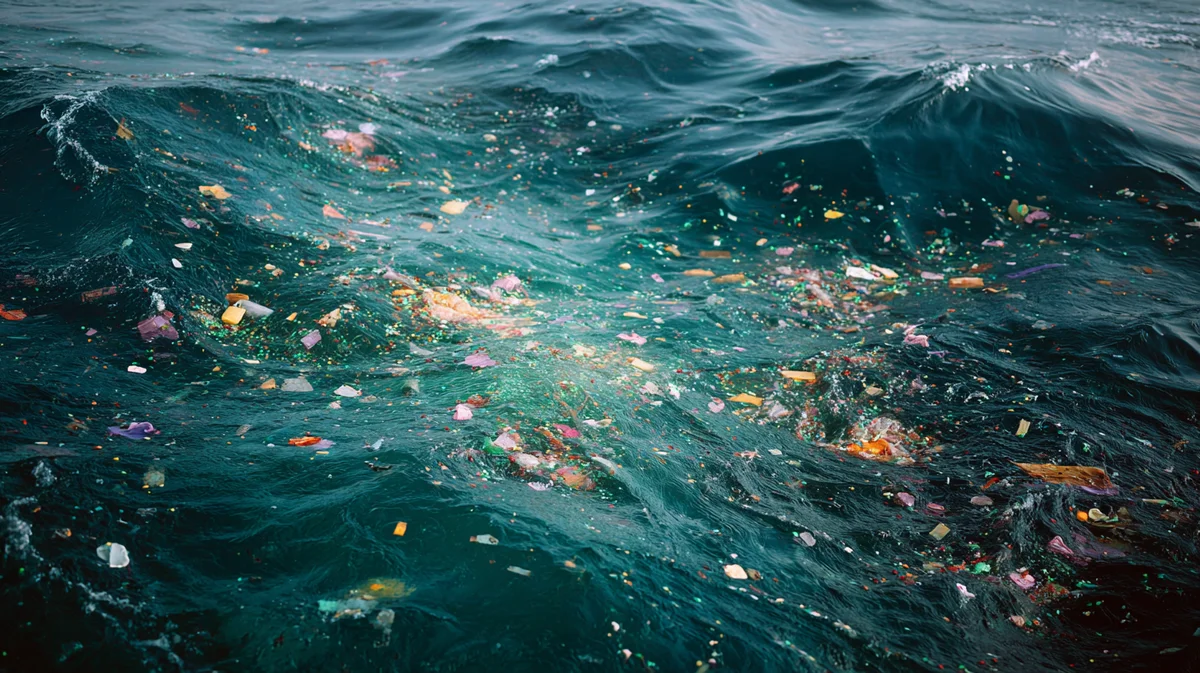
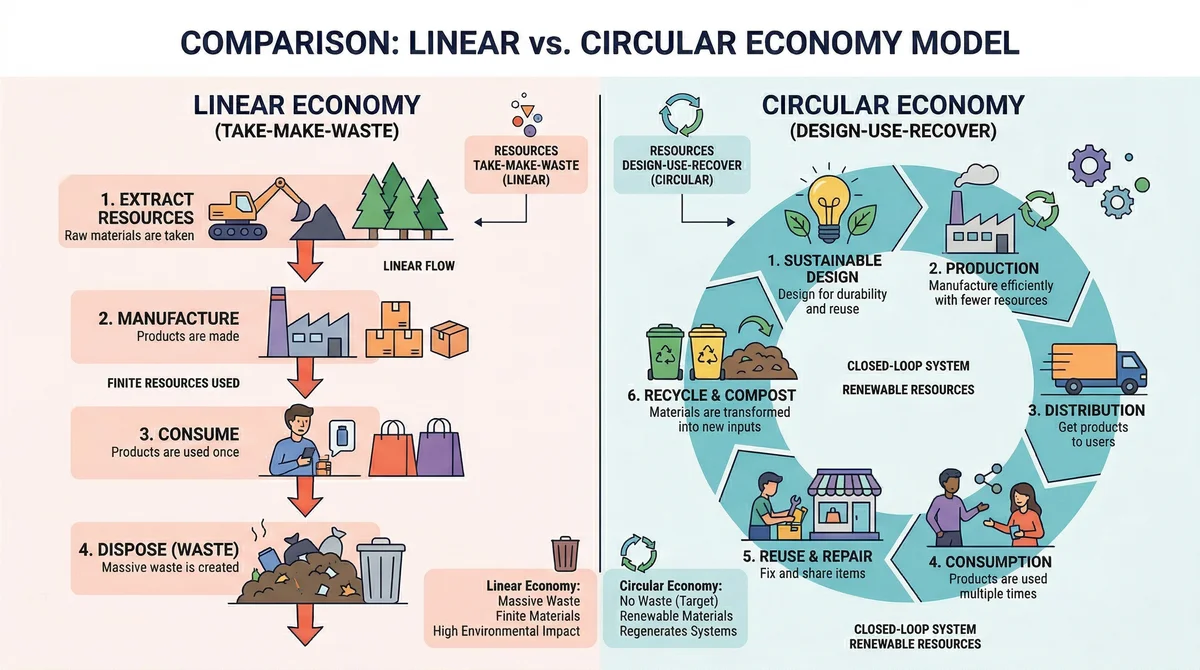
Imagine a world where the concept of waste simply doesn't exist. In nature, every output from one system is an input for another; a fallen leaf becomes food for a tree. For most of the last century, however, humans have lived in a linear economy: we take resources from the earth, make products, and eventually throw them away. When that product is a plastic bottle that ends up in the Great Pacific Garbage Patch, that linear path leads to a dead end for the ocean.
To truly solve the garbage patch problem, we have to move toward a circular economy. This means redesigning our entire industrial system so that materials are kept in use for as long as possible and products are designed to be reclaimed and reused from the very start. It shifts the burden of responsibility from you, the consumer, back to the companies that create the plastic in the first place.
Designing Out Waste
In a circular system, a plastic item is never intended to reach the ocean. This starts at the design phase. Companies are now exploring Extended Producer Responsibility (EPR) laws. Under EPR, a manufacturer is legally and financially responsible for their product through its entire lifecycle, including what happens to it after you are done with it. When a company knows they have to pay for the recycling or disposal of their packaging, they have a massive incentive to design it to be less wasteful (Ellen MacArthur Foundation, 2017).
Material Innovation
Circular design also means moving away from complex, multi-layered plastics that are impossible to recycle. For example, many snack bags are a mix of plastic and aluminum that can't be separated. A circular solution involves using single-material (monomaterial) packaging that can be easily melted down and turned into a new bag of the same quality, over and over again (OECD, 2022).
The Power of Collective Action
Individual choices matter, but they are most powerful when they drive systemic change. Because the Great Pacific Garbage Patch is located in international waters, no single country is responsible for it. This is a classic example of the Tragedy of the Commons, where a shared resource is neglected because no one owns it. To fix this, we need international treaties that hold all nations to the same standard (Hardin, 1968).
The UN Plastic Treaty
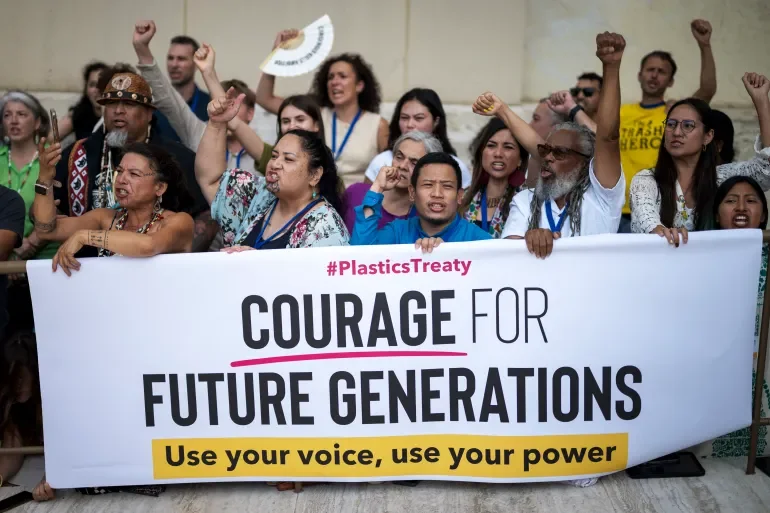
In 2022, UN member states agreed to develop a legally binding global treaty to end plastic pollution. This is a historic step that aims to regulate plastic from its production to its disposal. By setting global rules on how much plastic can be produced and how it must be managed, we can ensure that the 'tap' is turned off everywhere, not just in a few wealthy countries (UNEP, 2022).
Your Role in the System
While policy happens at high levels, the pressure for those policies comes from people like you. When you support companies that use circular business models, like refillable containers or 'take-back' programs, you provide the data that proves these systems work. Collective action also looks like participating in local government: advocating for better composting and recycling infrastructure in your own town ensures that the 'circular' loop has a place to live locally.
The Great Pacific Garbage Patch is a monument to our linear past. But by embracing circular design and global cooperation, we can make it a relic of history. The transition won't happen overnight, but the shift from 'waste management' to 'resource management' is the only path that leads to a clean, thriving ocean.
In this lesson, you explored the difference between a linear and a circular economy, learning that circularity requires designing out waste from the start. You investigated Extended Producer Responsibility (EPR) as a tool to hold companies accountable and learned about the UN Plastic Treaty as a global solution to the 'Tragedy of the Commons.' By understanding these systems, you can better use your voice and purchasing power to advocate for a future where plastic never reaches the ocean.
References
- Ellen MacArthur Foundation. (2017). The New Plastics Economy: Rethinking the future of plastics & catalysing action. Source
- OECD. (2022). Global Plastics Outlook: Policy Scenarios to 2060. Source
- Hardin, G. (1968). The Tragedy of the Commons. Science. Source
- United Nations Environment Programme. (2022). Historic day in the campaign to beat plastic pollution: Nations commit to develop a legally binding agreement. Source