Ghost Gear and Physical Threats
Examines the dangers of abandoned fishing equipment (ghost gear) which makes up nearly half of the patch's mass.
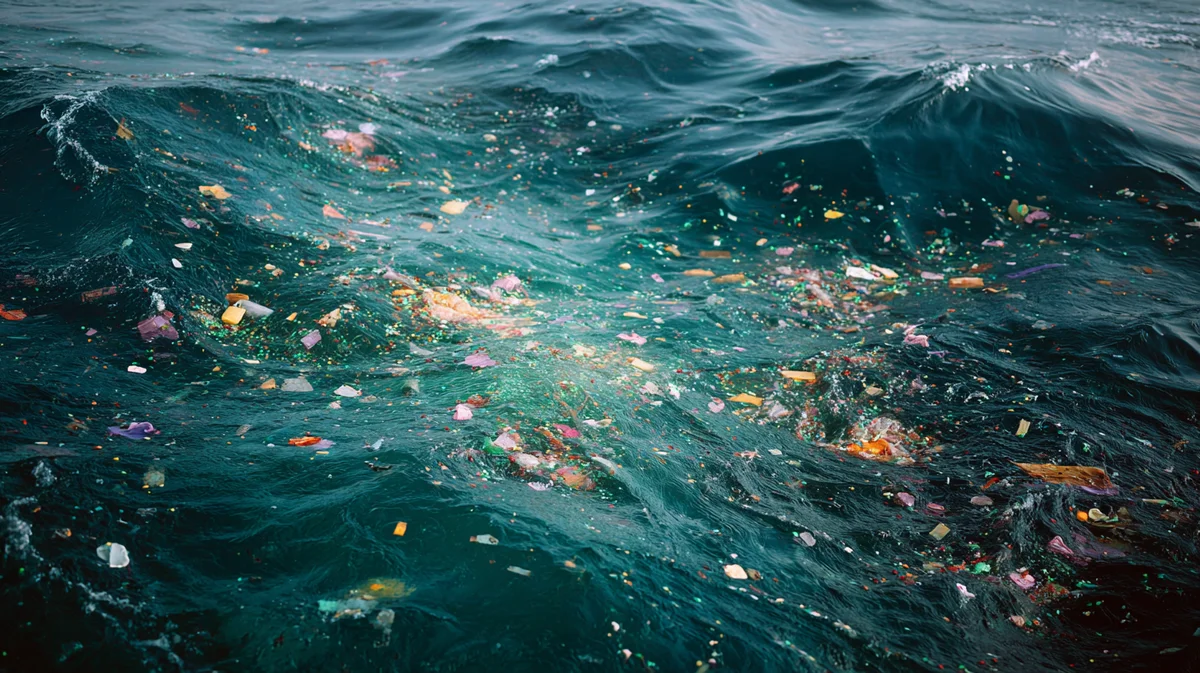
While microplastics are the 'invisible' threat of the Great Pacific Garbage Patch, there is a much larger, heavier, and more immediate killer lurking in the currents. If you could see the patch as a whole, the most prominent items wouldn't be bottles or bags, but massive, tangled webs of rope and netting.
This is 'ghost gear', the abandoned, lost, or discarded fishing equipment that continues to 'fish' long after humans have left it behind.
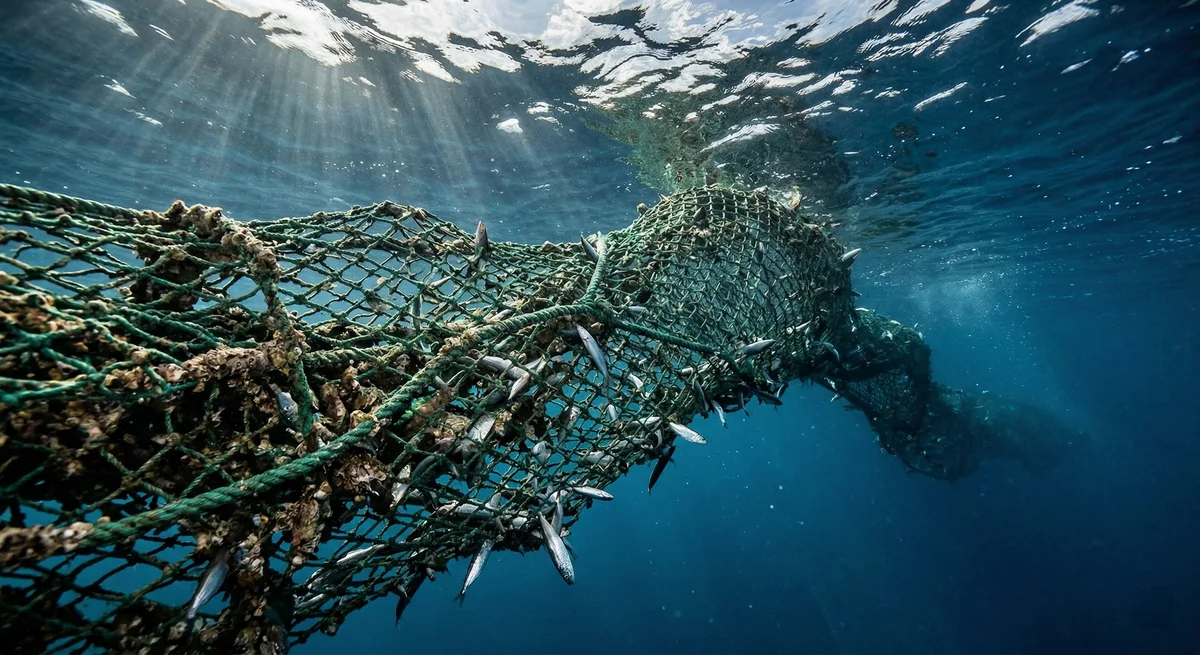
Ghost gear is particularly dangerous because it was designed for a single purpose: to catch and kill marine life. When these nets are lost at sea, they don't lose their effectiveness. Instead, they float through the gyre for years, entangling everything from small reef fish to massive humpback whales, creating a cycle of death that sustains itself as more animals get caught (Lebreton et al., 2018).
The Heavyweight Champion of Marine Debris
When people think of ocean plastic, they usually blame straws or shopping bags. While these are significant, the Great Pacific Garbage Patch has a surprising 'mass' problem. Research conducted by multi-vessel expeditions has revealed that ghost gear accounts for a staggering percentage of the total weight of the patch, far outweighing consumer packaging.
Why Fishing Gear Ends Up in the Gyre
Commercial fishing is a high-risk industry. In the rough waters of the North Pacific, gear can be lost during storms, snagged on the ocean floor, or discarded illegally to avoid disposal fees. Because this gear is made from heavy-duty plastics like nylon and polyethylene, it is incredibly buoyant and durable. A single 'ghost net' can weigh several tonnes and span hundreds of meters, making it a navigation hazard for ships and a death trap for wildlife (WWF, 2020).
The Cycle of Entanglement
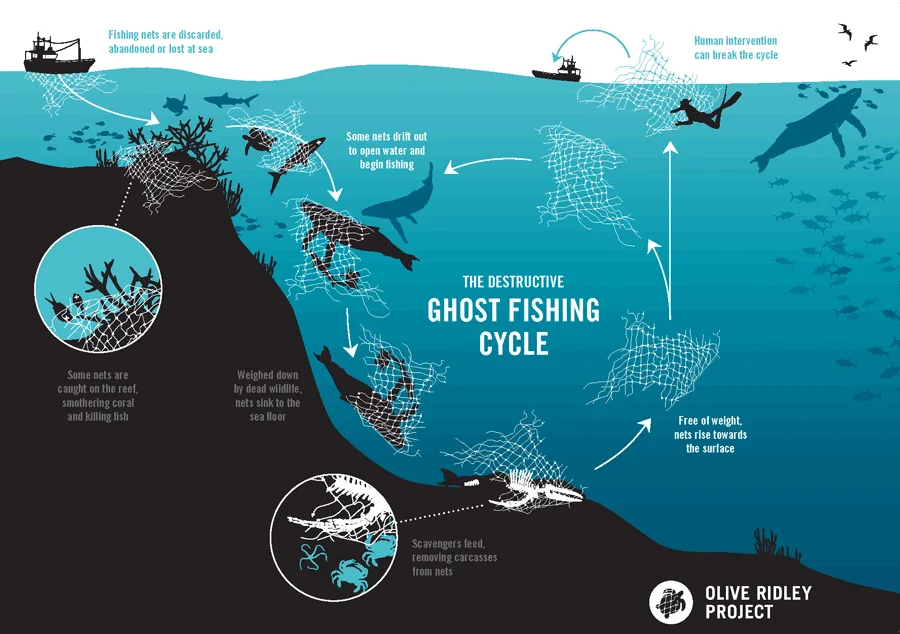
The mechanism of ghost fishing is a tragic feedback loop. A net catches a sea turtle; as the turtle decays, it attracts scavengers like sharks or crabs, who then also become entangled in the same net. This 'self-baiting' cycle can continue for decades until the net finally becomes so heavy with skeletons and barnacles that it sinks to the sea floor, where it continues to damage sensitive benthic ecosystems (FAO, 2009).
Threats to the Surface Life (The Neuston)
While we often focus on the large animals, ghost gear and floating debris also threaten a unique and often overlooked ecosystem: the neuston. This is the community of organisms that live exactly at the water's surface. These include beautiful creatures like the blue sea slug (Glaucus atlanticus) and violet snails, which use the surface tension of the water to survive.
Collision Course at the Surface
In the Great Pacific Garbage Patch, the neuston and the plastic occupy the same thin layer of the ocean. Ghost gear creates a physical barrier that can disrupt the movement of these species and prevent them from feeding. Furthermore, when cleanup vessels use massive nets to remove plastic, they often catch these rare surface-dwelling creatures as 'bycatch,' creating a difficult trade-off between removing pollution and protecting existing life (Helm, 2021).
Taking Action: Sustainable Seafood
How can you help from home? One of the most effective ways to address the ghost gear crisis is through your purchasing power.
By supporting 'traceable' seafood, where you can see exactly where and how a fish was caught, you support fisheries that use gear-tracking technology and responsible disposal practices. Look for certifications like the Marine Stewardship Council (MSC) or organizations that specifically fund 'gear retrieval' programs in the North Pacific.
In this lesson, you learned that ghost gear is the largest component of the Great Pacific Garbage Patch by weight. You explored the tragic 'ghost fishing' cycle that kills marine life for decades and the hidden surface ecosystems, the neuston, that are at risk from both plastic and cleanup efforts. By understanding that our appetite for seafood has a physical footprint in the middle of the ocean, you can make more informed choices that protect the marine world from these silent killers.
References
- Lebreton, L., et al. (2018). Evidence that the Great Pacific Garbage Patch is rapidly accumulating plastic. Scientific Reports. Source
- World Wildlife Fund. (2020). Stop Ghost Gear: The most deadly form of marine plastic debris. Source
- Food and Agriculture Organization. (2009). Abandoned, lost or otherwise discarded fishing gear. FAO Fisheries and Aquaculture Technical Paper. Source
- Helm, R. R. (2021). The ecosystem of the open ocean surface. PLOS Biology. Source