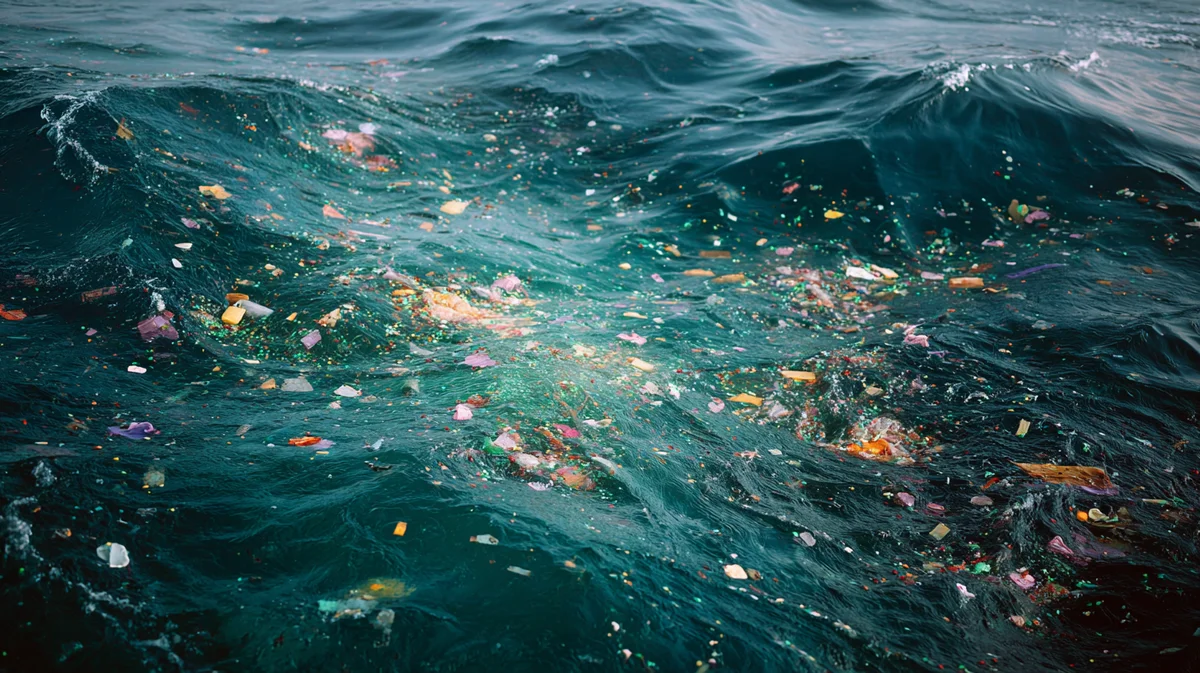
Stopping the Leak
Identifies how plastic reaches the ocean from our homes and cities, focusing on high-impact prevention over end-of-pipe cleanup.
Think about the last time you did a load of laundry. You likely tossed in a favorite polyester fleece or a pair of nylon leggings, started the cycle, and walked away. As the water drained out of the machine, it carried something invisible with it: hundreds of thousands of tiny synthetic microfibers. These fibers are too small for most municipal wastewater plants to catch, meaning your Wednesday chore might be contributing to the 'plastic soup' thousands of miles away.
We often think of ocean pollution as something that happens 'out there,' far from our daily lives. But the Great Pacific Garbage Patch is actually the destination of a massive, global plumbing system.
Most of the plastic in the ocean didn't just start on a boat; it started in a kitchen, a laundry room, or on a city street. To solve the problem, we have to look upstream to the points where plastic first enters the environment.
The River-to-Ocean Conduit
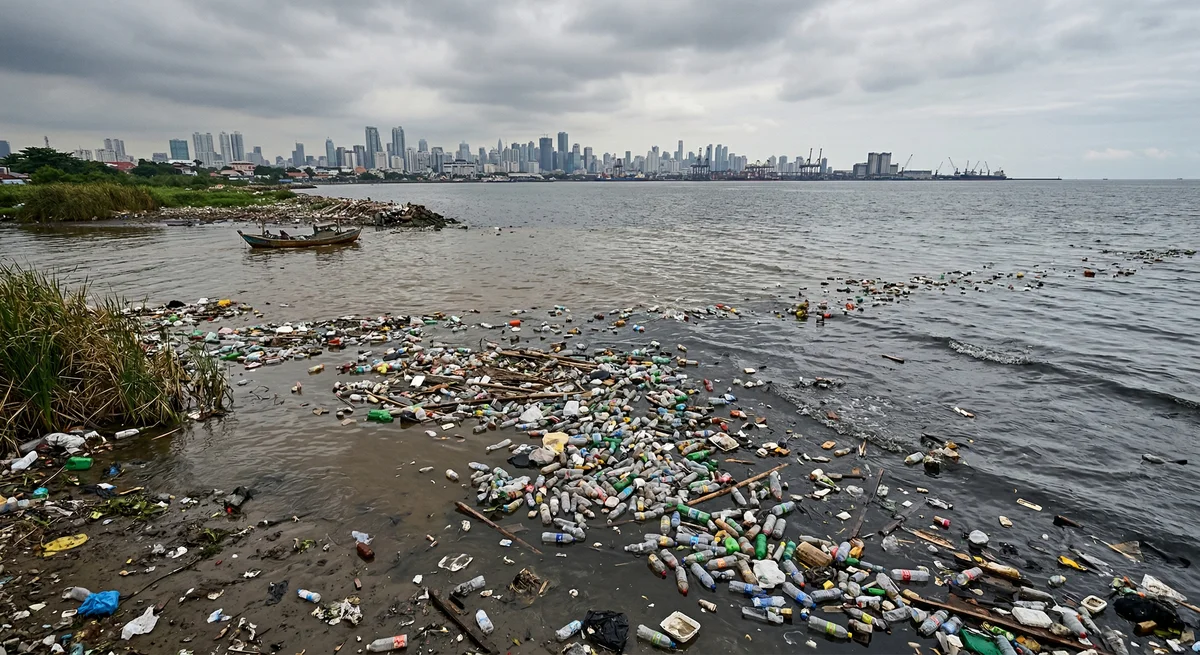
Rivers are the primary 'conveyors' of plastic waste. While thousands of rivers touch the sea, research shows that a small number of them are responsible for the vast majority of plastic leakage. Roughly 80% of ocean plastic comes from just 1,000 out of the millions of rivers globally (Meijer et al., 2021). These rivers act as funnels, gathering litter from city streets, overflowing landfills, and industrial sites, and dumping it directly into the marine currents that lead to the gyres.
The Urban Connection
In many cities, storm drains are not connected to water treatment plants. Anything that falls into a gutter, from a cigarette butt to a plastic wrapper, is washed by rain directly into local waterways. This is why 'stenciling' programs, which paint reminders like 'All Drains Lead to the Sea' on curbs, are so vital. They remind us that our local infrastructure is a direct pipeline to the North Pacific (EPA, 2022).
The Invisible Leak: Laundry and Microfibers
While bottles and bags are visible, microfibers from synthetic clothing represent a massive, hidden portion of the leak. Every time you wash a synthetic garment, it sheds tiny plastic threads. Because these fibers are so small, they easily bypass filtration systems and enter the food chain almost immediately. Scientists estimate that a single 6 kg / 13 lbs load of laundry can release over 700,000 microfibers (Napper & Thompson, 2016).
Fixing the Machine
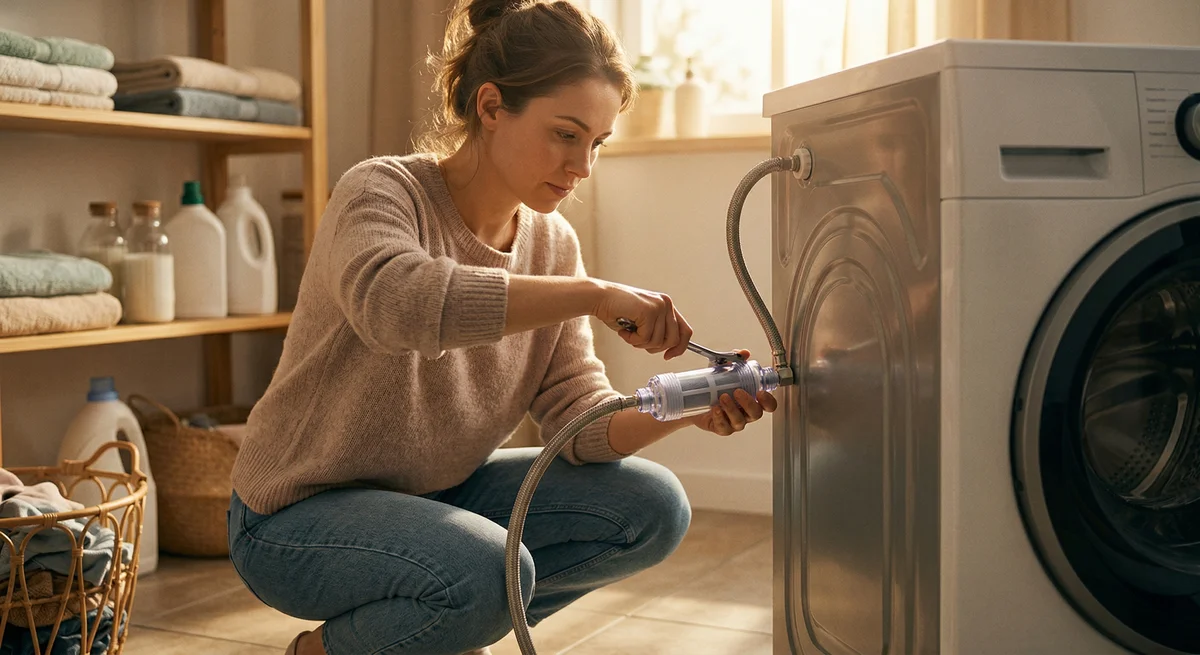
The solution isn't to stop washing clothes, but to change how we do it. Adding a microplastic filter to your washing machine or using a specialized laundry bag (like a Guppyfriend) can catch up to 90% of these fibers before they reach the drain. These small household interventions are far more efficient and cost-effective than trying to filter microfibers out of the open ocean once they have spread (Ocean Wise, 2019).
Prevention Over Cleanup
There is a popular saying in environmental science: "If your bathtub is overflowing, you don't start by mopping the floor; you turn off the tap." High-seas cleanup projects are the 'mop.' While they are helpful, they cannot keep up with the volume of plastic entering the water every day. Investing in better waste management in coastal cities and reducing our reliance on single-use plastics are the ways we 'turn off the tap.'
By understanding that the GPGP is a result of many small 'leaks' in our daily systems, we can take more effective action. Whether it's advocating for better filtration in our city's infrastructure or changing how we handle our laundry, every upstream fix reduces the pressure on the marine ecosystems of the Pacific.
In this lesson, you learned that most ocean plastic travels through rivers and storm drains, making urban areas the primary 'upstream' source of pollution. You discovered the hidden impact of microfibers from laundry and the importance of household filtration. Most importantly, you understood that preventing plastic from entering the water in the first place is significantly more effective than attempting to clean it up once it reaches the Great Pacific Garbage Patch.
References
- Meijer, L. J., et al. (2021). More than 1000 rivers account for 80% of global riverine plastic emissions into the ocean. Science Advances. Source
- Environmental Protection Agency. (2022). Trash Free Waters: How litter travels to the ocean. Source
- Napper, I. E., & Thompson, R. C. (2016). Release of synthetic microplastic fibres from domestic washing machines. Marine Pollution Bulletin. Source
- Ocean Wise Plastics Lab. (2019). Me, My Clothes and the Ocean: The microfiber report. Source