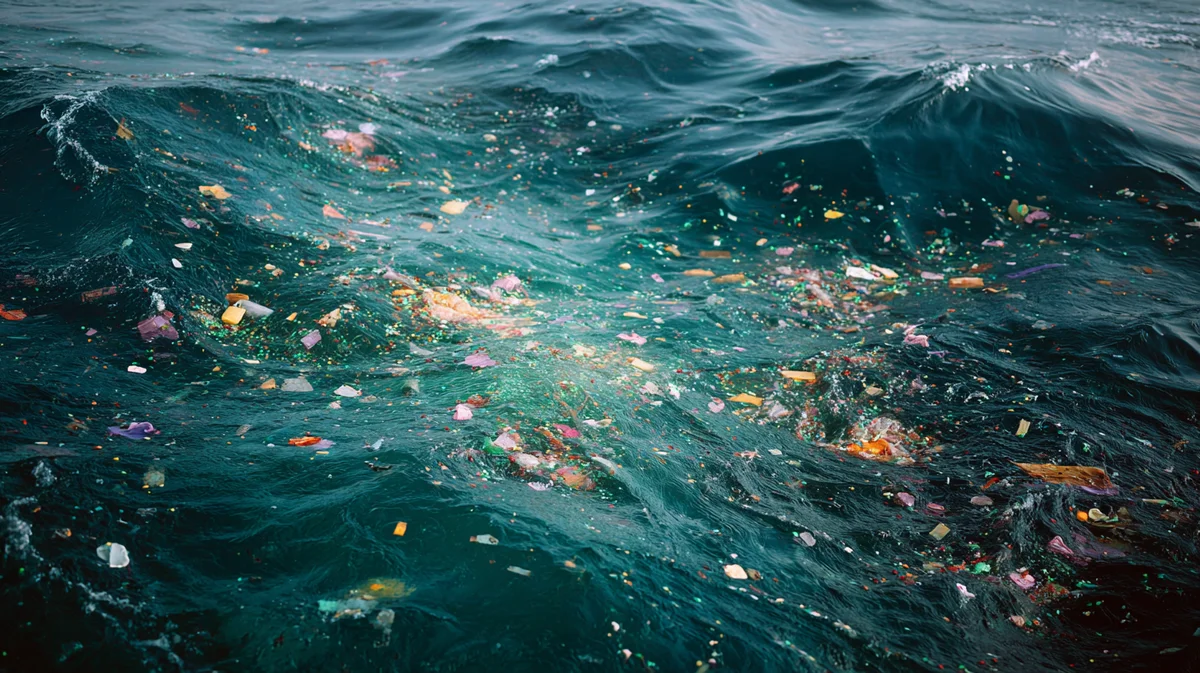
The Bioaccumulation Trap
Traces the journey of microplastics from the bottom of the food web to the human dinner plate via chemical magnification.
Imagine sitting down to a fresh seafood dinner. You might see a beautifully grilled fish or a bowl of mussels, but what you cannot see are the microscopic passengers that might have traveled from the center of the North Pacific to your plate. For decades, we treated the ocean as an infinite sink for waste, assuming that if plastic broke down into tiny pieces, it would simply disappear into the vastness of the water.
We now know that the smaller the plastic gets, the more easily it enters the living systems of our planet.
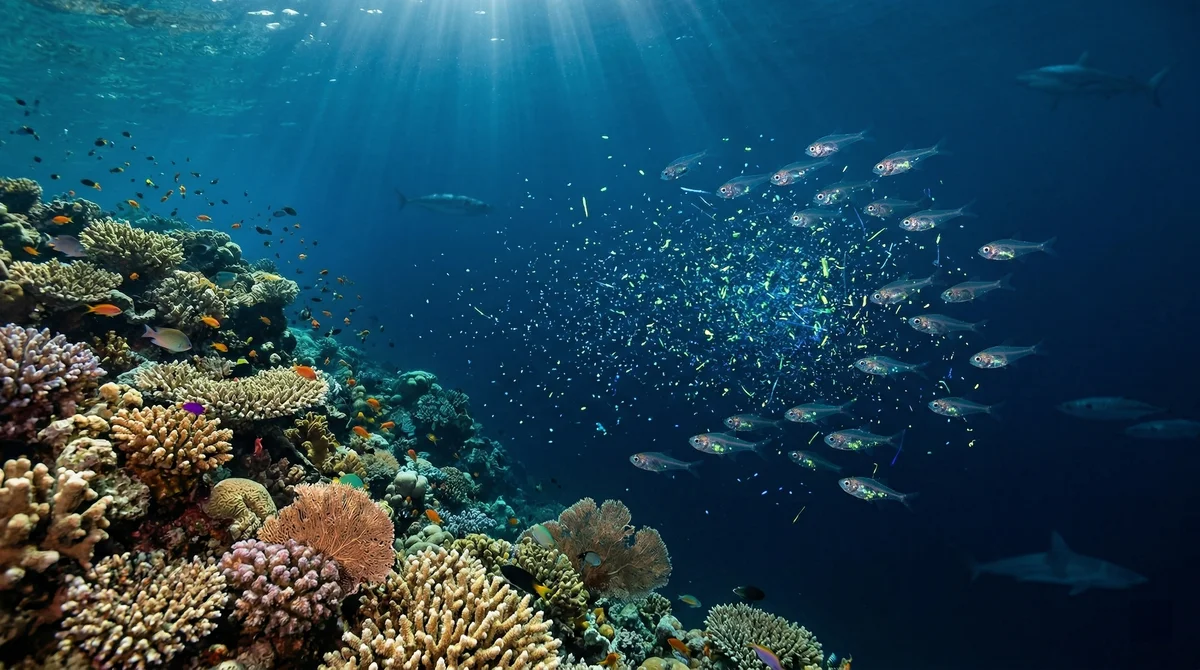
When plastic enters the ocean, it doesn't just sit there; it begins to interact with the chemistry of the water. Because plastics are made from petroleum, they are chemically 'lipophilic,' meaning they attract and absorb other oil-based pollutants that are already present in the sea. This turns every tiny microplastic into a concentrated chemical sponge for toxins that have been lingering in the environment for years (Mato et al., 2001).
The Invisible Upward Climb
The danger of microplastics isn't just the material itself, but how it concentrates poisons as it moves up the food chain. This process happens in two distinct but related steps that you can observe in almost any ecosystem, but it is particularly intense in the concentrated 'soup' of the Great Pacific Garbage Patch.
Bioaccumulation vs. Biomagnification
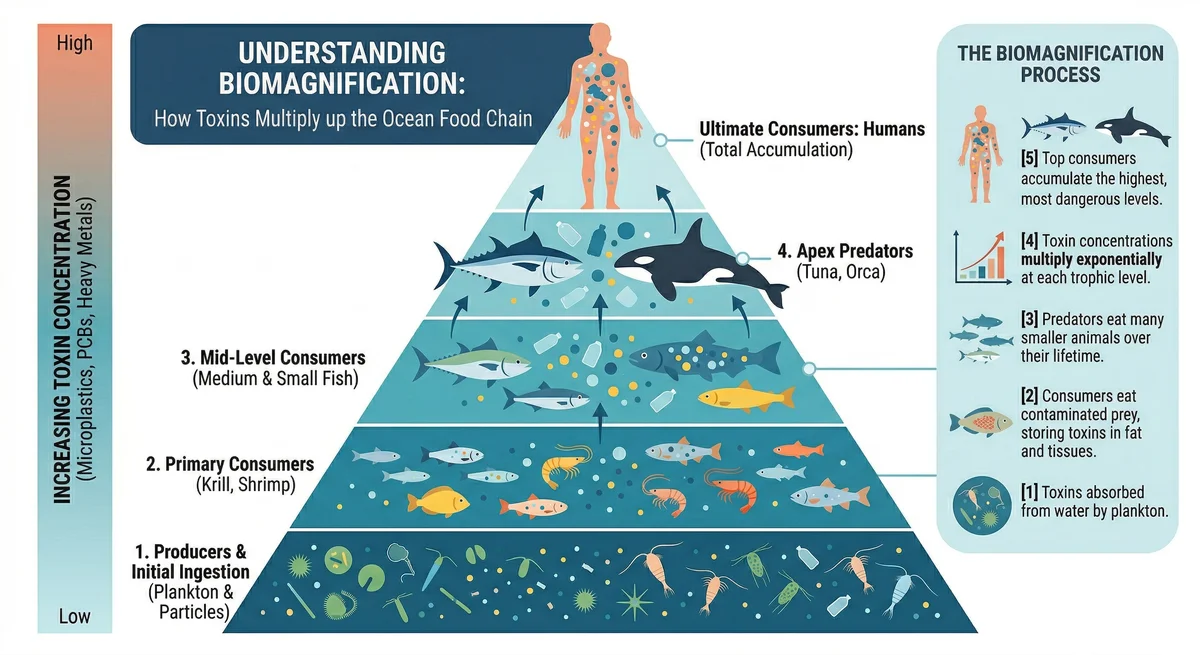
First, bioaccumulation occurs when a single organism, like a small shrimp or zooplankton, ingests microplastics. Because these plastics cannot be digested, they often stay in the gut or even cross into the animal's tissues. Over its lifetime, that single shrimp gathers more and more plastic and toxins. However, the real threat to humans comes from biomagnification.
This is the process where toxin concentrations increase significantly at every level of the food chain. When a small fish eats 1,000 shrimp, it inherits all the toxins those shrimp accumulated. When a tuna eats 100 of those fish, the chemical concentration becomes dangerous (UNEP, 2016).
The Chemical Passengers
Plastics act as magnets for Persistent Organic Pollutants (POPs), such as PCBs and DDT, which were banned decades ago but still exist in ocean water. Research has shown that toxins can be 100,000 to 1,000,000 times more concentrated on the surface of a microplastic particle than in the surrounding seawater. When a marine animal eats these 'toxic pills,' the chemicals are released into their fat cells, leading to reproductive issues, weakened immune systems, and even death in apex predators like orcas and sharks (Rochman et al., 2013).
From Ocean Gyre to Human Health
This biological journey doesn't end in the middle of the ocean. Because humans are apex predators who consume a wide variety of seafood, we are the final destination for many of these biomagnified toxins. While researchers are still studying the long-term effects, the presence of microplastics has already been confirmed in human blood, lungs, and even the placentas of unborn babies (Ragusa et al., 2021).
Impacts on Food Security
Beyond individual health, this is a crisis of food security. For billions of people globally, fish is a primary source of protein. If marine populations are weakened by plastic-related toxins, or if the fish becomes unsafe for human consumption, the economic and nutritional stability of coastal communities is at risk. This connects the Great Pacific Garbage Patch directly to your local market and the global economy. By choosing to reduce plastic waste today, you are protecting the safety of the food chain for future generations.
In this lesson, you explored the terrifying efficiency of the bioaccumulation trap. You learned that microplastics act as chemical sponges for ancient toxins, and that through biomagnification, these poisons become more concentrated as they move toward humans. By understanding that the ocean's health is inseparable from our own, we can see why protecting the North Pacific is not just an environmental goal, but a vital health and safety priority for every person on Earth.
References
- Mato, Y., et al. (2001). Plastic Resin Pellets as a Transport Medium for Toxic Chemicals in the Marine Environment. Environmental Science & Technology. Source
- United Nations Environment Programme. (2016). Marine Plastic Debris and Microplastics: Global Lessons and Research to Inspire Action and Guide Policy Change. Source
- Rochman, C. M., et al. (2013). Ingested plastic transfers hazardous chemicals to fish and induces hepatic stress. Scientific Reports. Source
- Ragusa, A., et al. (2021). Plasticenta: First evidence of microplastics in human placenta. Environment International. Source