The Immortal Material
Investigates why plastic persists in the ocean and how sunlight transforms large debris into a different kind of threat.
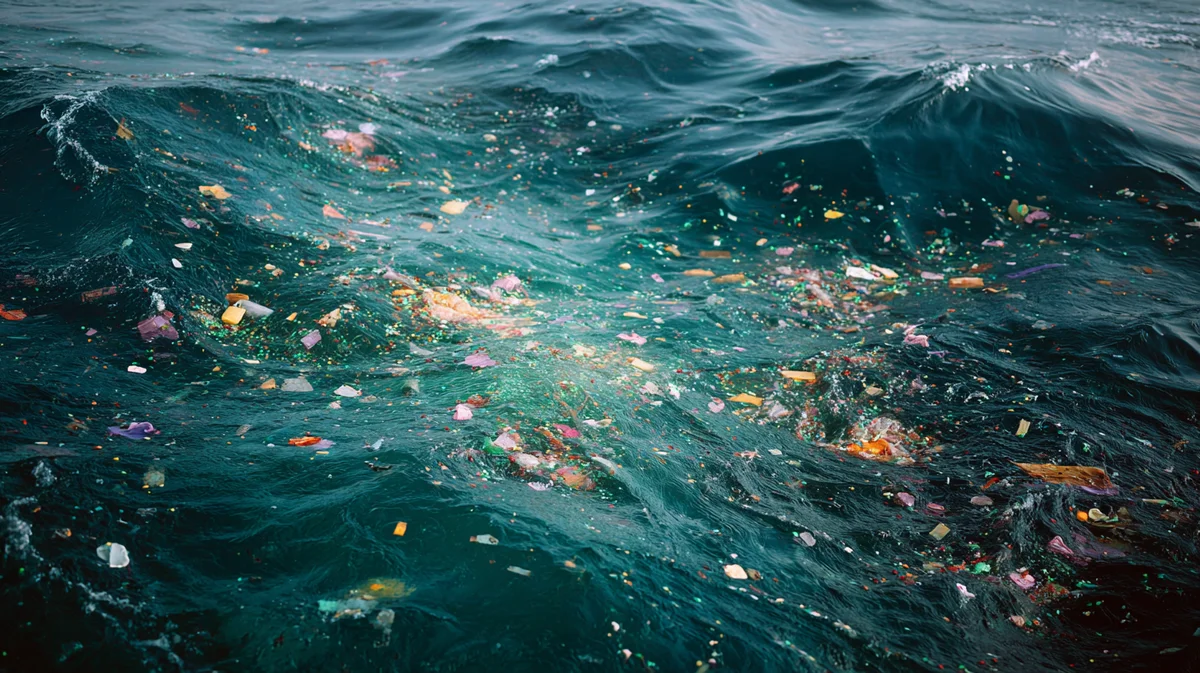
Consider the plastic toothbrush you used this morning. While its useful life might only be three months, its physical presence on Earth could last for 500 years or more. Unlike a piece of fruit or a wooden stick, plastic does not 'go away' in the natural environment. In the ocean, this durability creates a unique disaster: plastic doesn't rot, it just breaks into smaller and smaller pieces that never stop being plastic.
The Trap of Photodegradation
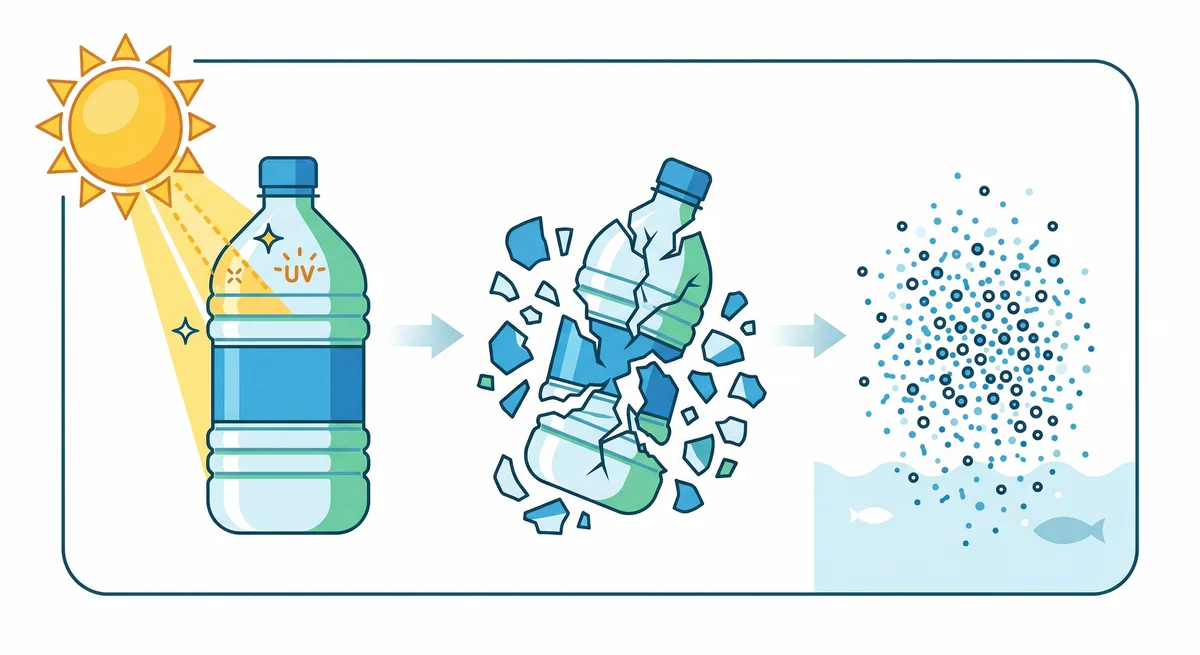
In a forest, bacteria and fungi break down organic matter into soil. However, in the ocean, no natural organism has evolved to fully digest the synthetic polymers that make up plastic. Instead of biodegrading, plastic undergoes photodegradation. When exposed to the sun's harsh ultraviolet (UV) rays, the long chains of molecules in plastic become brittle and crack. This turns one large bottle into thousands of tiny fragments (UNEP, 2021).
The Creation of Microplastics
As these pieces break down, they eventually become microplastics, particles less than 5mm (0.2 inches) in diameter. These tiny grains are often the same size as plankton, the tiny organisms that form the base of the ocean's food web. This makes photodegradation particularly dangerous; it transforms a visible piece of litter that could be picked up into an invisible pollutant that can be eaten by the smallest creatures in the sea.
The Myth of Biodegradability
You may have seen products labeled 'biodegradable' or 'compostable' and felt better about using them. However, these labels can be misleading when it comes to the ocean. Most 'compostable' plastics are designed to break down only in industrial facilities at very high temperatures. In the cold, dark, and oxygen-poor environment of the ocean, these materials can persist almost as long as standard plastic (Eriksen et al., 2014).
Why the Ocean Environment Slows Degradation
Degradation requires heat, light, and oxygen. Once a piece of plastic becomes slightly heavy with algae or 'bio-fouling,' it sinks below the surface where UV light cannot reach it. In the deep ocean, temperatures are near freezing and oxygen is limited. This means that a 'biodegradable' bag might sit on the ocean floor for decades, unchanged, because the specific conditions required for it to break down simply do not exist in the marine environment.
This 'immortality' is what makes the Great Pacific Garbage Patch so persistent. Every piece of plastic ever made that has entered the ocean is likely still there in some form. As we continue to produce more plastic, over 440 million tons globally every year, the 'soup' in the gyres only becomes thicker and more concentrated.
In this lesson, you learned that plastic does not biodegrade in the ocean; it photodegrades. This means sunlight breaks it into tiny microplastics that never truly disappear. You also discovered that 'biodegradable' plastics often fail to break down in the cold, dark conditions of the sea. Understanding this material persistence is key to realizing why we must focus on reducing plastic use rather than hoping it will eventually dissolve away.
References
- United Nations Environment Programme. (2021). From Pollution to Solution: A Global Assessment of Marine Litter and Plastic Pollution. Source
- Eriksen, M., et al. (2014). Plastic Pollution in the World's Oceans: More than 5 Trillion Plastic Pieces Weighing over 250,000 Tons Afloat at Sea. PLOS ONE. Source