
The Social Tipping Point
Analyze how Earth Day created a 'Policy Window' where public sentiment and political will aligned to allow for massive systemic change.
Have you ever noticed how a small habit in your neighborhood, like recycling or using reusable bags, suddenly becomes the norm for everyone? In social systems, change often happens slowly at first and then all at once. This is known as a social tipping point. In 1970, Earth Day wasn't just a gathering; it was the moment the environmental movement reached a critical mass that forced the entire political system of the United States to shift its gears.
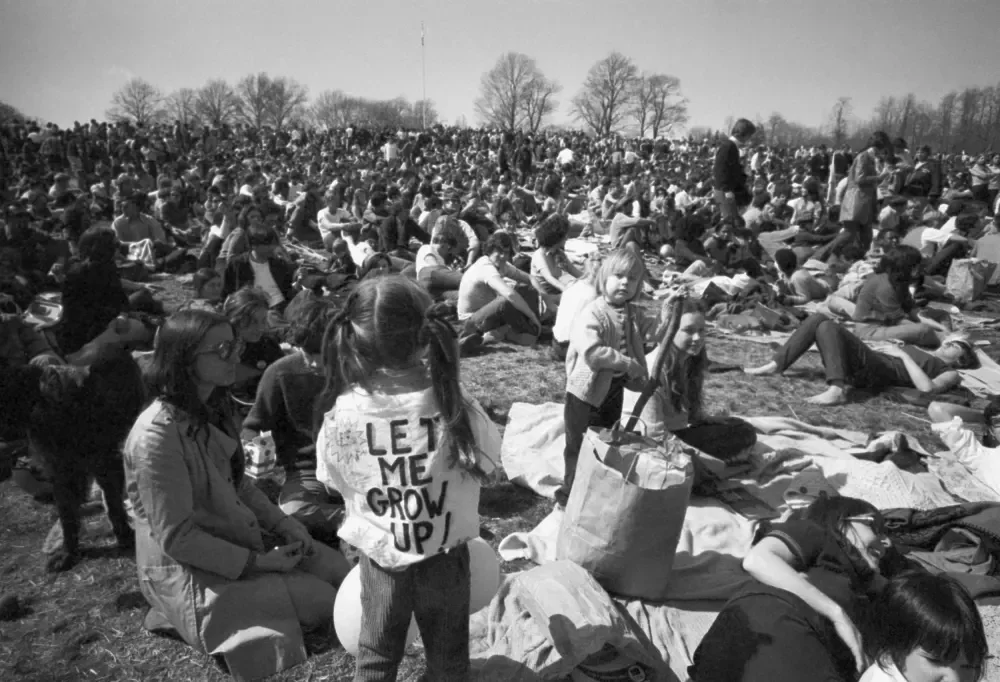
Think of it like a pot of water on a stove. You can add heat for a long time with no visible change, but once you hit 100°C / 212°F, the system undergoes a phase shift. By mobilizing 20 million people, roughly 10% of the US population at the time, Earth Day created enough 'heat' to boil over into the halls of Congress (EPA, 2020).
Opening the Policy Window
In political science, a Policy Window is a rare and fleeting opportunity where three things align: a recognized problem, a viable solution, and the political will to act. Before 1970, pollution was a recognized problem, and scientists had solutions, but the 'political will' was missing.
Earth Day smashed that window open by proving that environmental protection was a winning issue for voters across the spectrum.
The Power of 10 Percent
Why did 20 million people matter so much? Research into social dynamics suggests that once a committed minority reaches about 10% to 25% of a population, their ideas can quickly overturn the status quo (Centola et al., 2018). Earth Day hit that 10% mark in a single day. This created a 'feedback loop' where politicians realized that if they didn't support environmental laws, they might lose their jobs in the next election.
This pressure led to an incredible era of bipartisanship. In the early 1970s, environmentalism wasn't a 'left' or 'right' issue. Both parties saw the massive public outcry and cooperated to pass laws. For example, the Clean Air Act passed the Senate with a vote of 73-0. This shows how a social tipping point can temporarily bypass political gridlock to achieve systemic results.
Systems Thinking in Your Daily Life
You can see these same system dynamics in your own community. When you choose to support a local farmers' market or advocate for better bike lanes, you are contributing to a localized feedback loop. Businesses and local governments monitor these trends. When enough people switch their habits, whether it's choosing 5 kg / 11 lbs of local produce over imported goods or demanding plastic-free packaging, the system hits a tipping point where the 'sustainable' option becomes the default.
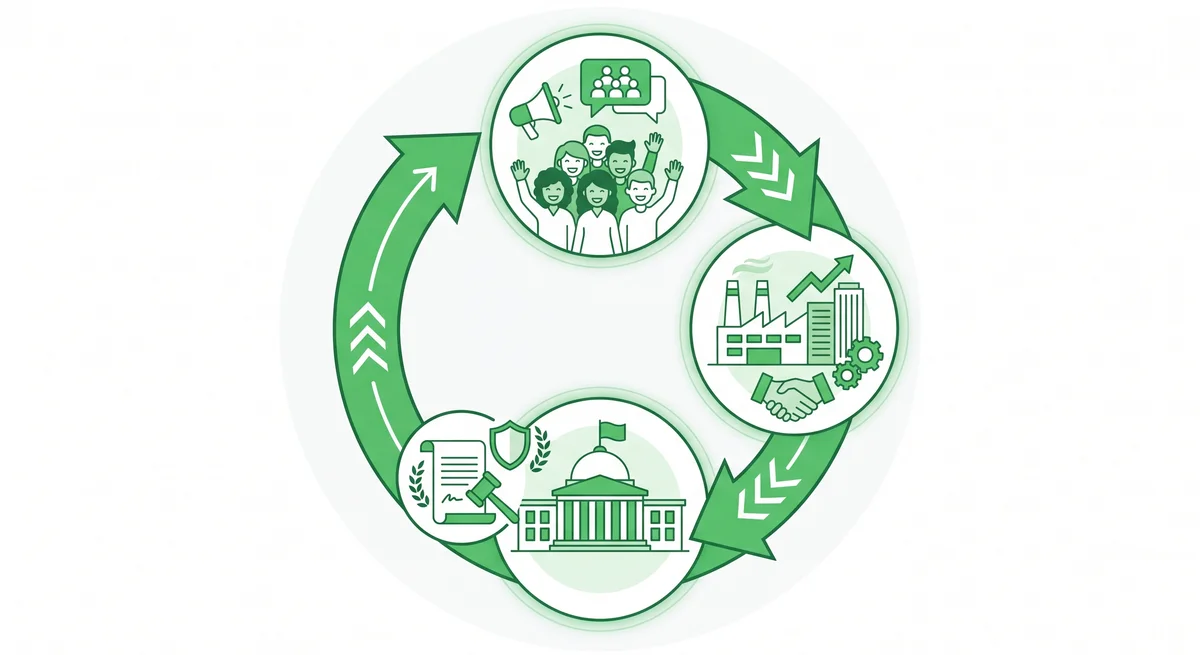
The lesson of 1970 is that your individual concern, when pooled with others, creates a force that is greater than the sum of its parts. By understanding that we live in a connected system, you can see that your actions aren't just drops in the bucket; they are the 'heat' that brings the system to a boil. This collective energy is what allowed the movement to eventually expand far beyond the borders of the United States.
Understanding these social mechanics prepares us for the next phase of the movement. Now that we know how the system was tipped in one country, we must look at how Earth Day used these same levers to go global and influence the entire planet's future. In the next lesson, you will explore how the movement scaled from a US 'teach-in' to an international diplomatic powerhouse in 1990.