How Manicured Lawns Starve Native Bees
Discover how the conversion of diverse landscapes into unbroken turf grass disrupts the year-round food supply for native pollinators.
Walking through a typical suburban neighborhood, you often see a sea of green. Perfectly mowed lawns, tidy edges, and maybe a few well-behaved shrubs line the pavements. To a human, this landscape looks vibrant, healthy, and under control.
But if you view that same street from the perspective of a native solitary bee, it looks like an absolute wasteland. Those vast stretches of uniform green grass offer no nectar, no pollen, and nowhere to build a nest. Despite being surrounded by plants, local insects are quietly starving in these manufactured landscapes.
Why are the wild bees disappearing from our neighborhoods even when everything looks so green?
The rise of the urban food desert
When communities expand, natural meadows and forests are almost entirely replaced with pavement and non-native turf grass. By converting naturally diverse plant life into sprawling lawns, developers and homeowners accidentally create vast ecological food deserts for native wildlife.
Turf grass is wind-pollinated and rarely allowed to bloom, meaning it provides exactly zero calories for a foraging insect. As urbanization accelerates, the loss of global insect biomass is heavily tied to this eradication of native flora (FAO, 2019). Every square meter of pristine, weed-free lawn replaces the flowering plants that solitary bees rely on to feed their young.
Even when a neighborhood has a few flower beds, the overarching floral carrying capacity, the total amount of nectar and pollen available to support insect life, is drastically lower than it was before the neighborhood was built.
The danger of unbroken landscapes
Because wild solitary bees are remarkably small, they cannot fly long distances to find food. Most native bee species have flight ranges of a few hundred meters or less from their nesting sites.
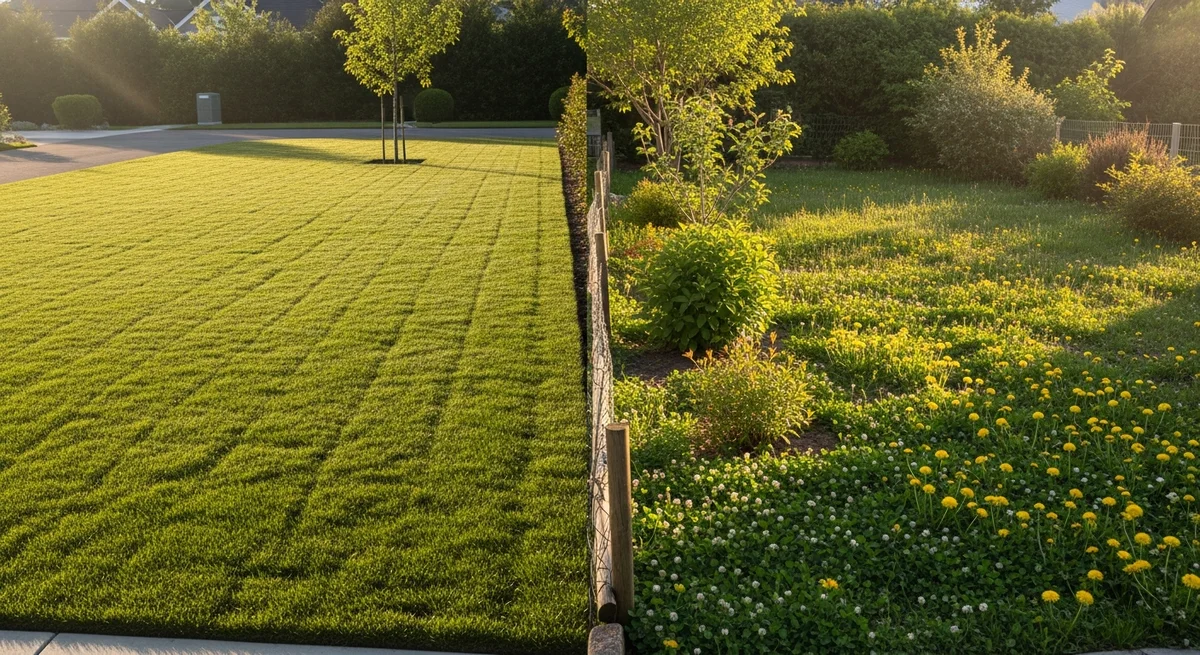
When we plant huge, unbroken expanses of lawn between properties, we create impassable dead zones. A solitary bee cannot cross an acre of barren grass to reach a single flower pot on a distant porch without running out of energy. To survive, they need continuous patches of native flowers acting as stepping stones throughout the neighborhood.
Understanding the overlapping pressures
Habitat loss does not act alone; it is part of a broader systemic collapse. Scientists often group the primary drivers of insect decline into the Four P system of pollinator decline: Poor nutrition, Pesticides, Pathogens, and Poor weather (Goulson et al., 2015).
While all four factors overlap and multiply each other's effects, poor nutrition from habitat loss is the foundational stressor. A well-fed bee with abundant, diverse pollen sources is far more resilient to changing weather and mild pathogen loads. By removing the food, we weaken the insects against every other threat they face.
What to take away
A manicured lawn might look beautiful, but it actively starves local ecosystems by eliminating the floral diversity insects require.
- Unbroken expanses of turf grass act as ecological food deserts, providing zero calories for pollinators.
- Wild solitary bees have very short flight ranges and require continuous, unbroken patches of flowering habitat to survive.
- Poor nutrition is the foundational stressor that makes native insects highly vulnerable to diseases and extreme weather.
- Allowing patches of clover or native plants to interrupt your lawn creates vital stepping stones for struggling bee populations.
Next, we will look at the second major driver of decline: how the chemical sprays used to maintain these lawns make their way into the pollen itself.
References
- Food and Agriculture Organization of the United Nations. (2019). The State of the World's Biodiversity for Food and Agriculture. Source
- Goulson, D., Nicholls, E., Botías, C., & Rotheray, E. L. (2015). Bee declines driven by combined stress from parasites, pesticides, and lack of flowers. Science. Source