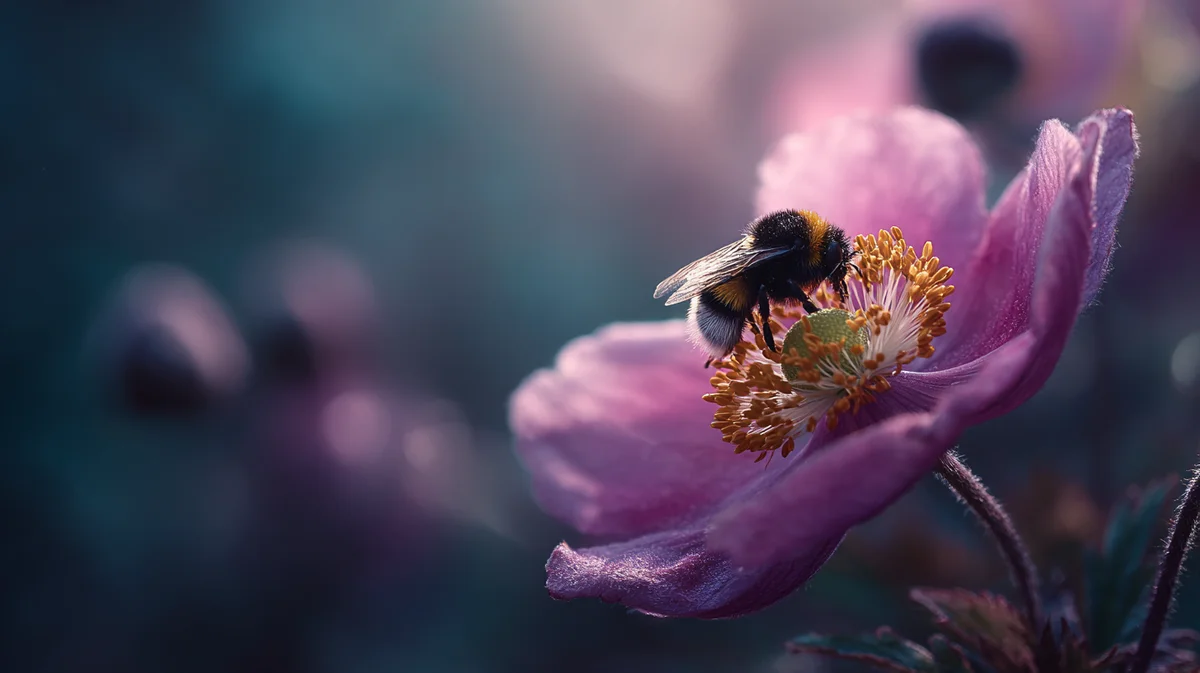
How messy gardening supports wild bees
Discover why perfect lawns act as food deserts, and learn how leaving leaves and stems intact provides vital winter habitats for solitary bees.
Standard yard care dictates that a good garden is a clean garden. We spend autumn bagging up fallen leaves, trimming dead stalks to the ground, and making sure our beds are topped with fresh, uniform mulch.
This aesthetic instinct keeps outdoor spaces looking tidy, but it accidentally strips the environment of the exact materials local wildlife uses to survive the winter. While managed agricultural honeybees stay warm inside their artificial wooden hives, the solitary insects that actually form the backbone of the local ecosystem are left with nowhere to go.
What can you change about your typical yard work to actually help wild bees survive?
Where solitary bees actually live
Unlike managed honeybees, wild pollinators do not have a beekeeper to build them a winter home. They rely entirely on the natural debris that standard residential gardening tries to remove.
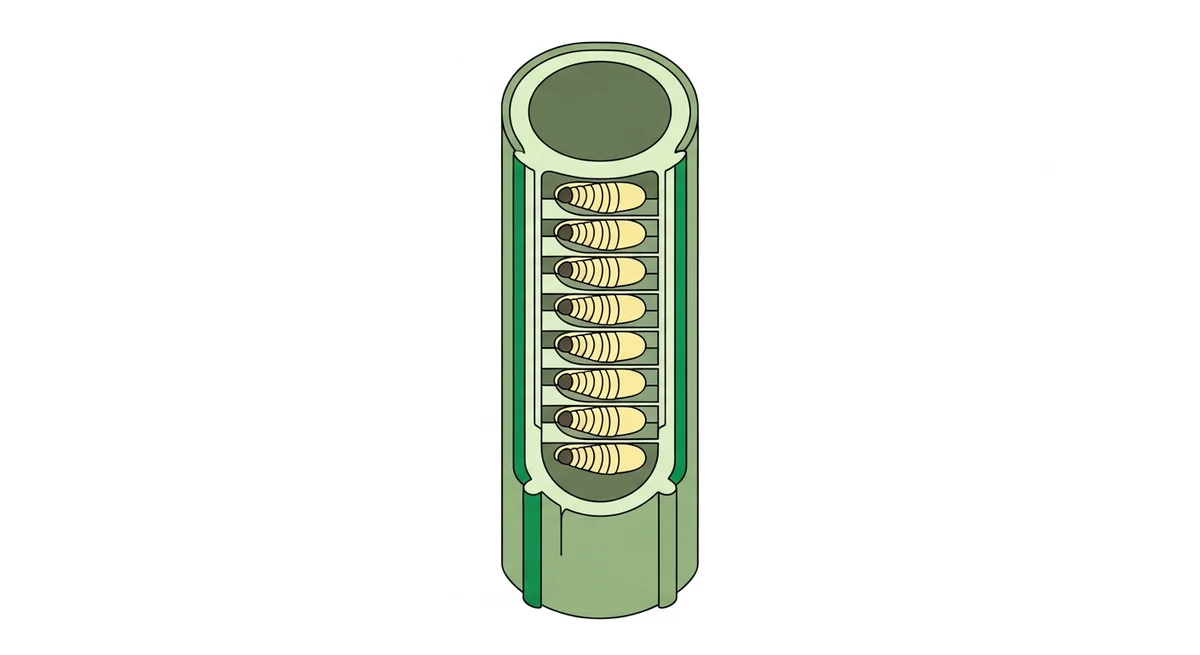
Over 90% of solitary bee species nest entirely out of sight, either in underground burrows or inside hollow plant stems (Xerces Society, 2024). They spend most of their life cycle developing from eggs into adults during the cold months. A female solitary bee will find a hollow reed or a soft patch of earth, lay her eggs, pack them with a small ball of pollen, and seal the chamber.
If you cut all dead stems to the ground in autumn, you are often throwing next year's entire generation of local pollinators directly into the municipal yard waste bin.
The ecological value of a messy yard
Restoring habitat often requires doing less physical work, not more. By deliberately embracing messy gardening, you intentionally leave natural nesting materials intact through the winter and early spring.
A ground-nesting solitary bee does not build a massive, complex colony. Instead, a single female excavates a narrow tunnel just a few centimeters below the soil surface.
She relies on specific soil conditions to survive. Heavy layers of decorative wood mulch or synthetic landscape fabric physically block her from reaching the dirt. By leaving a few discrete patches of bare earth in sunny, well-draining spots, you give these vulnerable species exactly what they need to reproduce safely.
Fallen leaves provide critical thermal insulation for both ground-nesting bees and overwintering butterflies. Hollow stalks from plants like raspberries, coneflowers, and native grasses act as natural, weather-proof nurseries. Leaving a few patches of bare, unmulched soil allows female bees to dig their shallow nests without fighting through heavy layers of decorative bark.
Waiting until daytime temperatures consistently reach 10°C (50°F) in the spring ensures that dormant insects have safely emerged before you clear away the debris.
Rethinking the lawn footprint
The easiest place to start restoring habitat is the traditional manicured lawn.
Unbroken expanses of short, green turf grass require heavy water inputs, yet they function as ecological food deserts that offer zero nectar or pollen. You do not have to eliminate your grass entirely, but reducing your manicured turf footprint creates immediate, low-effort space for biodiversity.
Simply allowing low-growing flowers like clover or dandelions to bloom provides crucial early-season food when very few other plants are awake. Many municipalities now formally participate in 'No Mow May', an initiative where residents pause their lawnmowers for the first month of spring (Del Toro & Ribbons, 2020). This simple delay lets vital early blooms emerge, offering a massive calorie boost to solitary bees right as they wake from hibernation.
The cosmetic pesticide trap
Even a diverse, carefully planned messy garden can become a trap if it is treated with broad-spectrum chemicals.
Reflexively using bug sprays to keep a yard looking pristine often backfires. A broad-spectrum insecticide cannot tell the difference between an unwanted aphid and a beneficial wild bee (Sánchez-Bayo & Wyckhuys, 2019). When you spray to keep ornamental leaves perfectly unchewed, you also eliminate the natural predators, like ladybugs and lacewings, that would otherwise keep pest populations in check naturally.
Fact: Broad-spectrum insecticides kill almost all insects they touch, wiping out the beneficial predators and wild pollinators that keep the local ecosystem balanced.
Choosing to tolerate minor insect damage on plant leaves is a core part of maintaining a living landscape. A yard with zero insect damage is functionally a dead zone. If a plant requires constant chemical protection to survive in your climate, it is likely the wrong plant for your local ecosystem.
What this means for your yard
A healthy ecosystem rarely looks like a perfectly manicured golf course.
- Wild solitary bees need unmulched soil, fallen leaves, and standing dead stems to survive the winter.
- Reducing your mowing frequency allows early bloomers like clover to feed emerging pollinators.
- Broad-spectrum yard sprays kill beneficial predators and bees alongside pests.
Once you stop trying to keep your yard perfectly tidy, you can start focusing on planting the right things to feed the insects that live there.
References
- Xerces Society for Invertebrate Conservation. (2024). Nesting & Overwintering Habitat for Pollinators & Other Beneficial Insects. Source
- Del Toro, I., & Ribbons, R. R. (2020). No Mow May lawns have higher pollinator richness and abundances: An engaged community provides floral resources for urban bees. Source
- Sánchez-Bayo, F., & Wyckhuys, K. A. (2019). Worldwide decline of the entomofauna: A review of its drivers. Source