Why Honeybees Are Livestock
Learn the critical difference between managed agricultural honeybees and the wild solitary bees that actually power your local ecosystem.
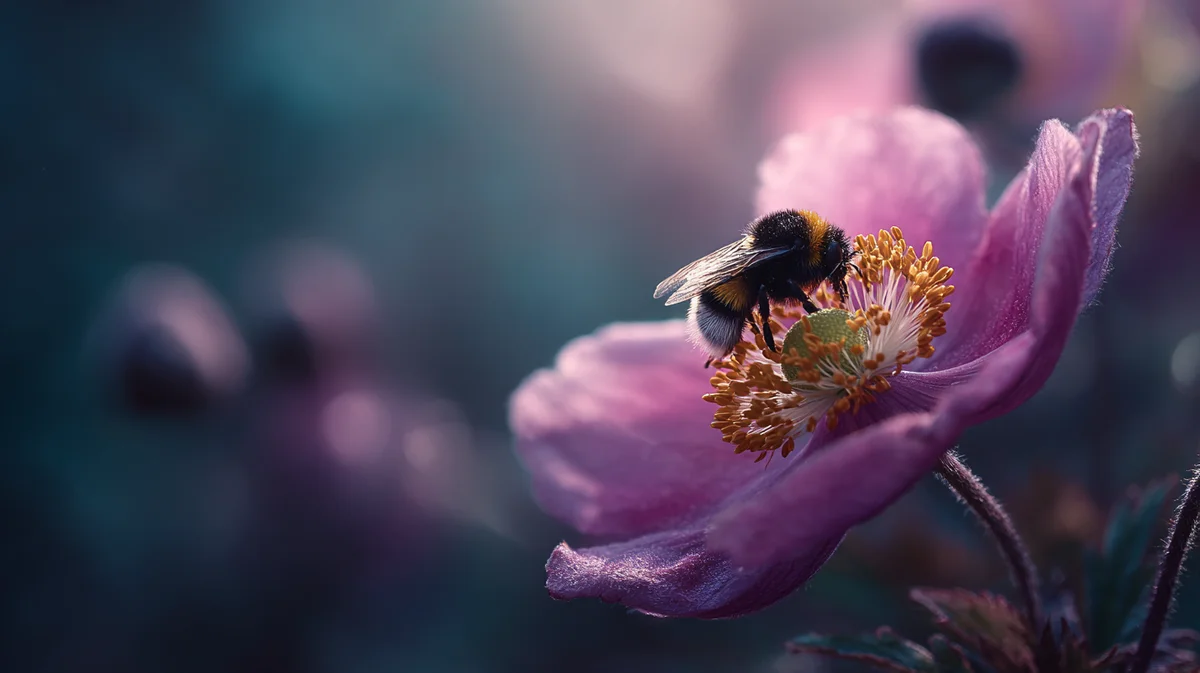
When you hear that pollinators are in trouble, the image that usually comes to mind is a fuzzy, striped insect buzzing around a hexagonal honeycomb.
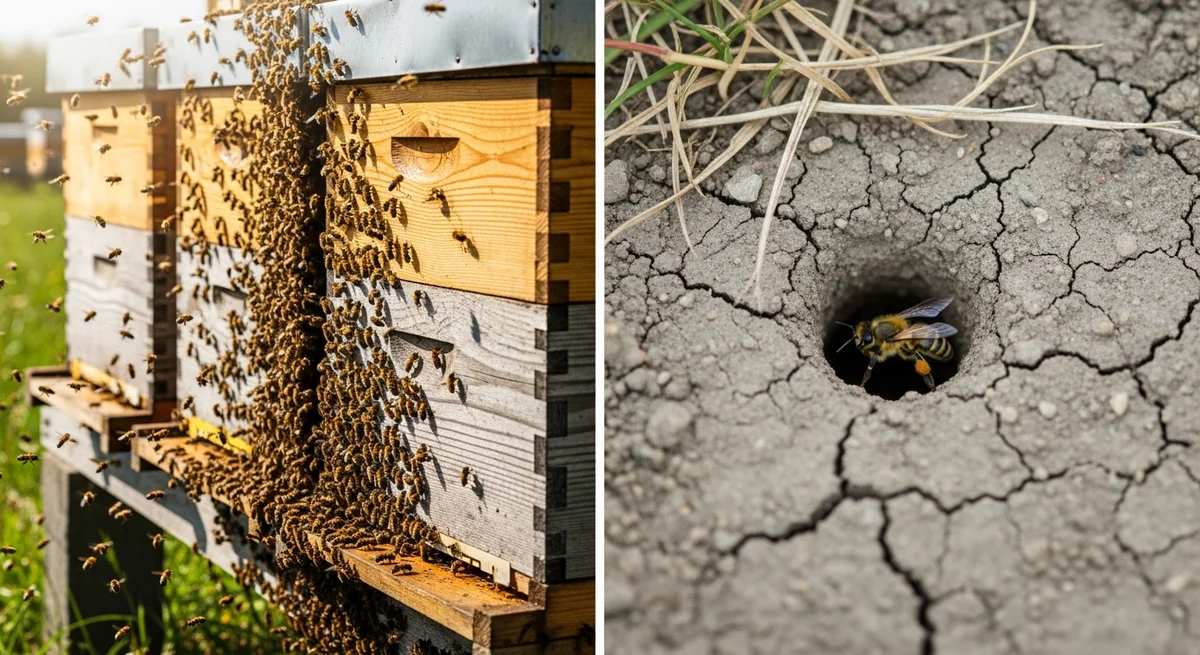
That image has driven thousands of well-meaning people, businesses, and schools to install hives on their properties, convinced they are actively rescuing nature. But those hives are filled with an insect that already has billions of individuals spread across the globe, managed closely by human industries.
Isn't getting a backyard beehive the best way to save the local bees?
The livestock masquerading as wildlife
The insects inside those backyard boxes are western honeybees, which are actually managed agricultural animals used to pollinate commercial crops.
Ecologically, setting up a honeybee hive to help wild pollinators is equivalent to keeping a flock of backyard chickens to save wild birds. The western honeybee is a globally distributed, highly successful livestock species that humans breed, feed, and transport to support food production (Colla & MacIvor, 2017). They live in massive colonies of up to 60,000 workers led by a single queen, and because humans manage their reproduction, they are not at risk of extinction.
Yet because honeybees are the most visible and well-branded pollinator, public concern over ecological collapse was quickly channeled into buying and keeping more of them. This creates a massive blind spot regarding the insects that are actually disappearing.
Fact: Honeybees are a globally abundant agricultural species. The true conservation crisis involves the severe decline of thousands of species of unmanaged, wild solitary bees.
The invisible majority
The vast majority of pollination in a natural ecosystem is done by insects you rarely notice.
True pollinator diversity includes roughly 20,000 unique species of wild bees worldwide, alongside essential contributors like hoverflies, beetles, and moths (Xerces Society, 2023). Unlike honeybees, most native bee species are wild solitary bees, meaning every female is fertile and builds her own tiny nest without a queen, a colony, or a cooperative workforce.
Because they do not need to keep a massive colony alive through the winter, solitary bees do not make honey. They do not build wax combs or aggressively defend territory.
Instead, they live their brief adult lives pollinating local flowers, provisioning a few eggs with enough pollen to survive, and dying before autumn.
How wild bees actually live
Because our cultural image of a bee involves a hive, we tend to design outdoor spaces without considering where wild insects actually sleep and reproduce.
Roughly 70 percent of wild native bees are ground-nesting species. They require patches of bare, undisturbed soil to dig vertical tunnels where they lay their eggs. The remaining 30 percent are cavity nesters, utilizing hollow plant stems, dead wood, or abandoned beetle burrows (FAO, 2022).
This unique life cycle means that their survival depends heavily on precise local conditions. Through a process called nest provisioning, a solitary female bee mixes gathered pollen and nectar into a nutrient-dense loaf, lays a single egg on it, and seals it in a chamber. If she cannot find enough local, native flowers within a short flight distance of her burrow, she cannot reproduce, and her local lineage ends.
What to take away
The first step in habitat restoration is knowing which insects actually require our help.
- The western honeybee is a managed agricultural animal, not an endangered wild species.
- Keeping backyard honeybees to "save the bees" is like keeping chickens to save wild birds.
- Over 90 percent of bee species are solitary, meaning they have no queens, do not make honey, and nest in the ground or hollow plant stems.
- True conservation requires supporting a wide diversity of wild pollinators, not just a single livestock species.
Now that you know who the actual wild natives are, the next lesson explores what happens when we drop thousands of honeybees into their territory.
References
- Colla, S. R., & MacIvor, J. S. (2017). Questioning public perception, conservation policy, and recovery actions for honeybees in North America. Conservation Biology. Source
- Xerces Society for Invertebrate Conservation. (2023). Wild Bee Conservation. Xerces Society. Source
- Food and Agriculture Organization of the United Nations. (2022). The State of the World's Biodiversity for Food and Agriculture. FAO. Source