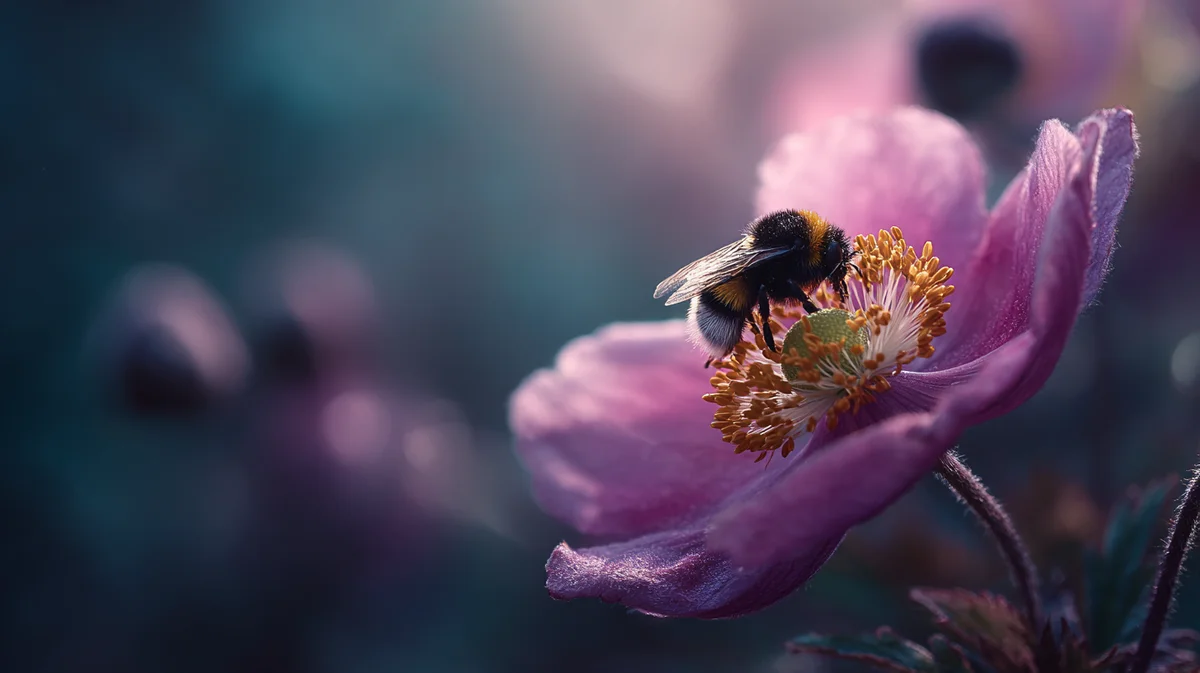
Why native plants matter for wild bees
Learn how highly bred garden-center flowers often starve local insects, and why planting diverse native species is essential.
Walking through a commercial garden center, you are surrounded by walls of vibrant, perfect flowers. It is tempting to grab whichever blooms look the most colorful, assuming that any bright petal will automatically feed local insects.
But if you watch closely in a garden, you might notice that wild bees completely ignore certain spectacular, massive blooms while crowding around plainer, weedier-looking patches. Not all plants are actually recognized as food by the wildlife living outside your door. A beautiful flower bed can still be an ecological desert.
When you are standing in the nursery aisle, does it actually matter what kind of flowers you choose to plant?
The power of co-evolution
Local insects and local plants have spent thousands of years adapting to one another. This deep, localized relationship is the foundation of a healthy ecosystem.
Through a process of co-evolution, native wild bees developed specific physical traits and behaviors to extract nectar and pollen from specific native flowers (Gómez et al., 2010). For example, some bees have extra-long tongues perfectly calibrated to reach the bottom of deep, tubular native blossoms. Others have adapted to vibrate their wing muscles at a specific frequency to shake pollen loose from native tomato or blueberry flowers, a technique called buzz pollination.
When you plant species native to your specific region, you provide food in the exact shape, size, and chemical composition that your local wildlife has evolved to digest. Generic, imported plants simply do not fit these physical locks. This tight evolutionary matching even dictates timing: many wild solitary bees emerge from hibernation perfectly synchronized with the exact week their specific native host plant begins to bloom.
The trap of exotic ornamentals
Many of the most popular plants sold at hardware stores and garden centers are exotic ornamentals. These are plants imported from other continents or heavily modified by breeders for visual appeal.
Unfortunately, humans and bees value very different things in a flower. Breeders often select plants for massive, showy blooms, unusual colors, or extra layers of petals. In the process of creating these complex double-petal flowers, the plant's reproductive parts are often literally bred out of existence (Corbet et al., 2001). The extra petals physically block bees from reaching the center, and the flower itself often produces zero nectar or pollen.
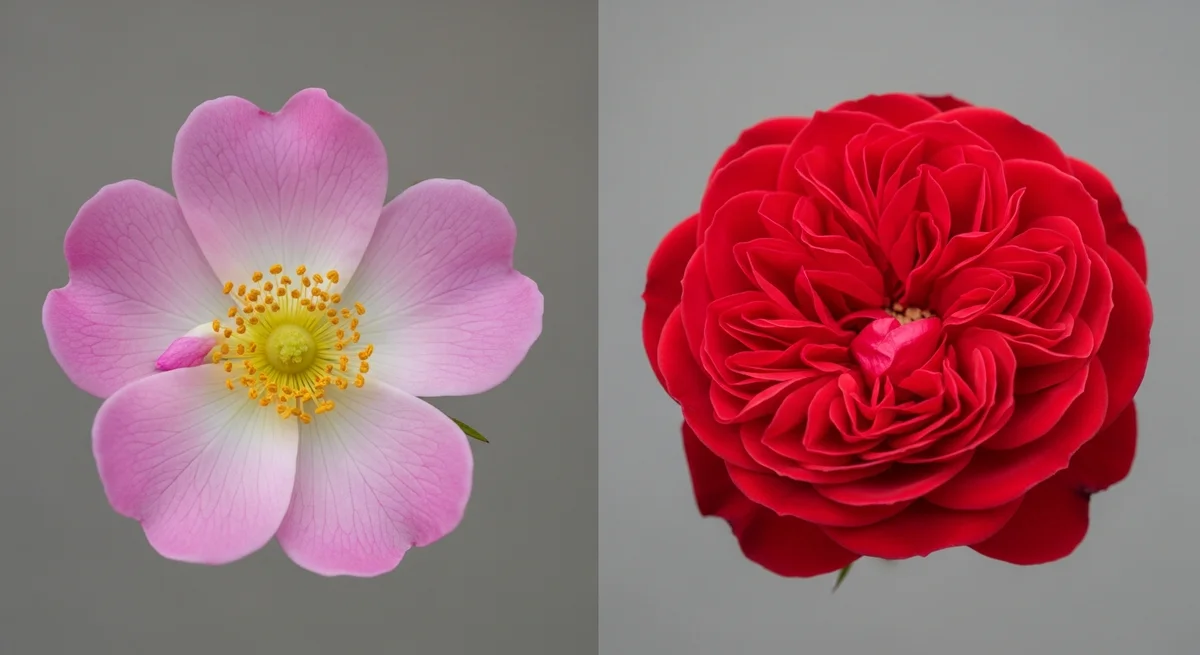
To a native bee, a heavily bred ornamental rose might look visually interesting, but it smells and tastes like plastic. It provides no calories. If a yard is filled exclusively with exotic ornamentals, the local insects will starve.
Even when garden centers sell native plants, they often sell cultivated varieties altered for human tastes, like changing the leaf color from green to dark purple. These chemical changes often make the leaves unpalatable to the native insects that rely on them.
Planning for sequential blooming
Choosing the right native species is the first step. The second is making sure those plants offer a continuous food supply.
A common gardening mistake is buying plants that all bloom at the exact same time in mid-summer. This creates a brief feast followed by months of famine. Wild bees need a continuous, unbroken chain of food from the moment they wake up to the moment they hibernate.
To prevent seasonal starvation, aim for sequential blooming: intentionally planting a mix of species so that at least two are blooming at any given point during the growing season. You need early-spring bloomers (like native willows) for bees emerging from winter, mid-summer native wildflowers for peak colony growth, and late-autumn bloomers (like native asters) so insects can store enough fat to survive the next winter (Mallinger et al., 2016).
By mapping out when your garden centers will bloom, you guarantee that your local habitat never experiences a sudden drought of calories.
Putting it together
Transforming an outdoor space into a true habitat means prioritizing insect nutrition over human aesthetics.
- Native wild bees and native flowers evolved together, creating precise physical matches that exotic plants cannot replicate.
- Highly bred ornamental flowers often have their nectar bred out of them, making them useless as food.
- Planting a diverse mix of native species ensures continuous, sequential blooming from early spring through late autumn.
By treating your garden as a local feeding station rather than just a visual display, you directly support the wild bees that hold your ecosystem together.
References
- Gómez, J. M., Perfectti, F., & Jordano, P. (2010). The role of pollinators in the evolution of corolla shape in wild plants. New Phytologist. Source
- Corbet, S. A., Bee, J., Dasmahapatra, K., et al. (2001). Native or exotic? Double or single? Evaluating plants for pollinator-friendly gardens. Source
- Mallinger, R. E., Gibbs, J., & Gratton, C. (2016). Diverse landscapes have a higher abundance and species richness of spring wild bees by providing complementary floral resources over bees' foraging periods. Source