Detergent Myths
While microfibers represent physical pollution, we must also address the chemical pollution leaving our washing machines.
Walk down the laundry aisle of any supermarket, and you will see giant plastic jugs with massive measuring caps. For decades, consumers have operated under a seemingly logical assumption: if your clothes are extra dirty, you should use extra detergent to get them clean.
This is a fundamental misunderstanding of how cleaning chemistry works.
The active ingredients in detergents are called surfactants. Surfactants work by lowering the surface tension of water, allowing it to grab onto oils and dirt so they can be rinsed away. However, there is a strict chemical limit to how much dirt a given volume of water can suspend.
Fact: Excess detergent cannot be rinsed away. It leaves a sticky residue on your clothes that actually attracts dirt and traps bacteria, causing odors over time.
Chemical Runoff and Systemic Interventions
When you pour a full cap of detergent into a standard load, you are drastically overdosing the machine.
Excess detergent does not magically find more dirt to clean; they simply remain in the water. This creates a thick, sudsy residue that coats your clothing, traps dead skin cells, and provides a breeding ground for the very bacteria you are trying to eliminate.
Furthermore, this massive excess of chemical surfactants is flushed down the drain, putting an unnecessary and toxic load on aquatic ecosystems where they can disrupt the natural surface tension of waterways and harm fish gills (EPA, 2022).
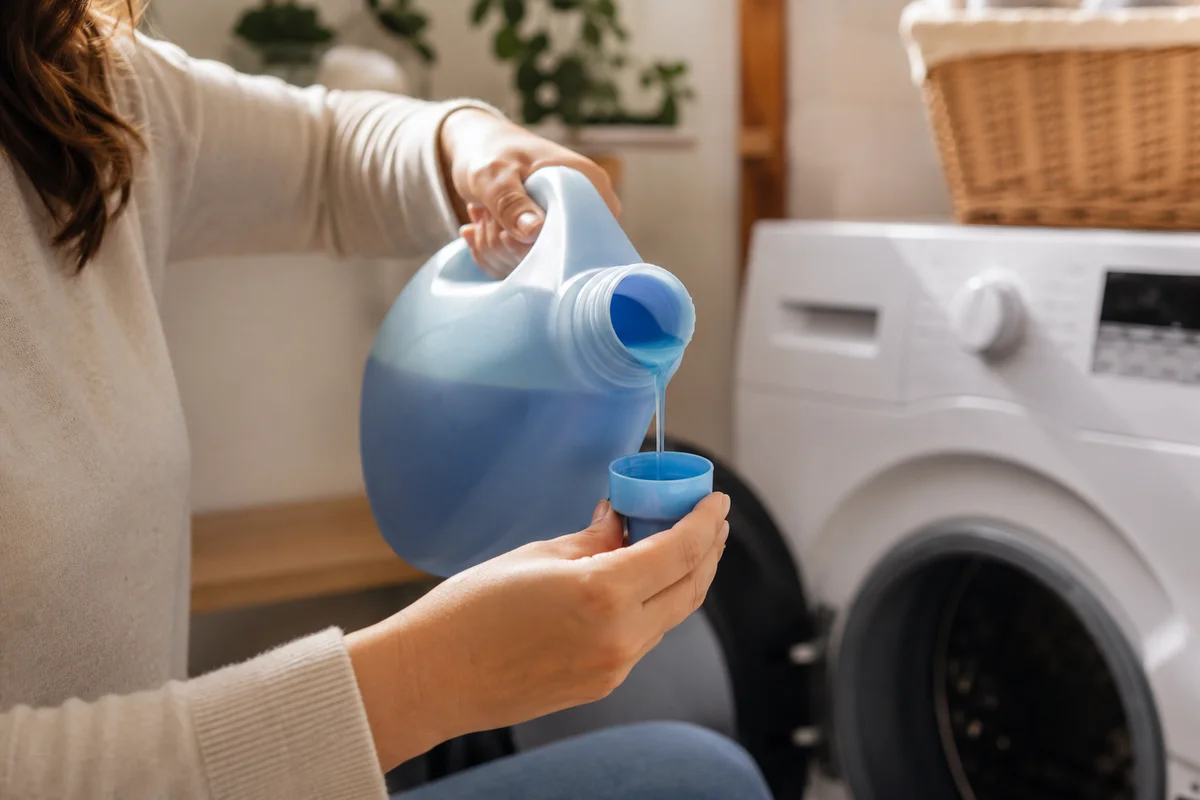
The solution requires a change in daily habits. Modern, high-efficiency detergents are incredibly concentrated. For a normal load of laundry, you only need about 1 to 2 tablespoons (roughly 15 to 30 milliliters) of liquid detergent.
By ignoring the deceptive lines on the giant measuring caps and dosing correctly, you instantly reduce your chemical runoff, save money, and get your clothes truly clean.
References
- U.S. Environmental Protection Agency. (2022). Safer Choice: Ingredients in Cleaning Products. EPA. Source