The Microfiber Pathway
Traces the journey of microscopic plastics from the washing machine to municipal wastewater and ocean food webs.
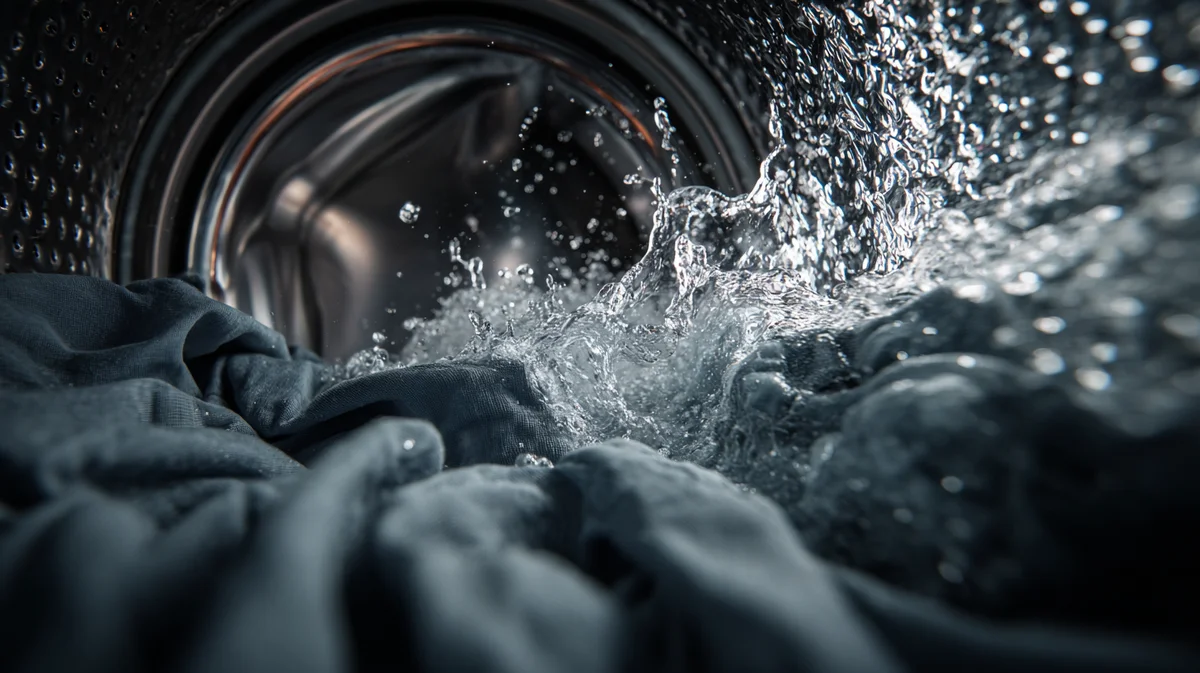
Think about your favorite athletic shirt, your cozy fleece pullover, or those stretchy yoga pants. They are lightweight, they dry quickly, and they are incredibly comfortable. But these garments share a hidden characteristic: they are made of plastic. When you toss them into the washing machine, the vigorous spinning and sloshing might get them clean, but it also triggers an invisible form of pollution.
As water rushes through the fabric and garments rub against one another, millions of microscopic plastic threads snap off. These threads wash down your drain, completely unseen by the naked eye. Simultaneously, the chemical detergents you poured in to clean those clothes are rushing out into the same pipes. What happens after the water leaves your home is a systemic environmental challenge.
The Anatomy of Lint
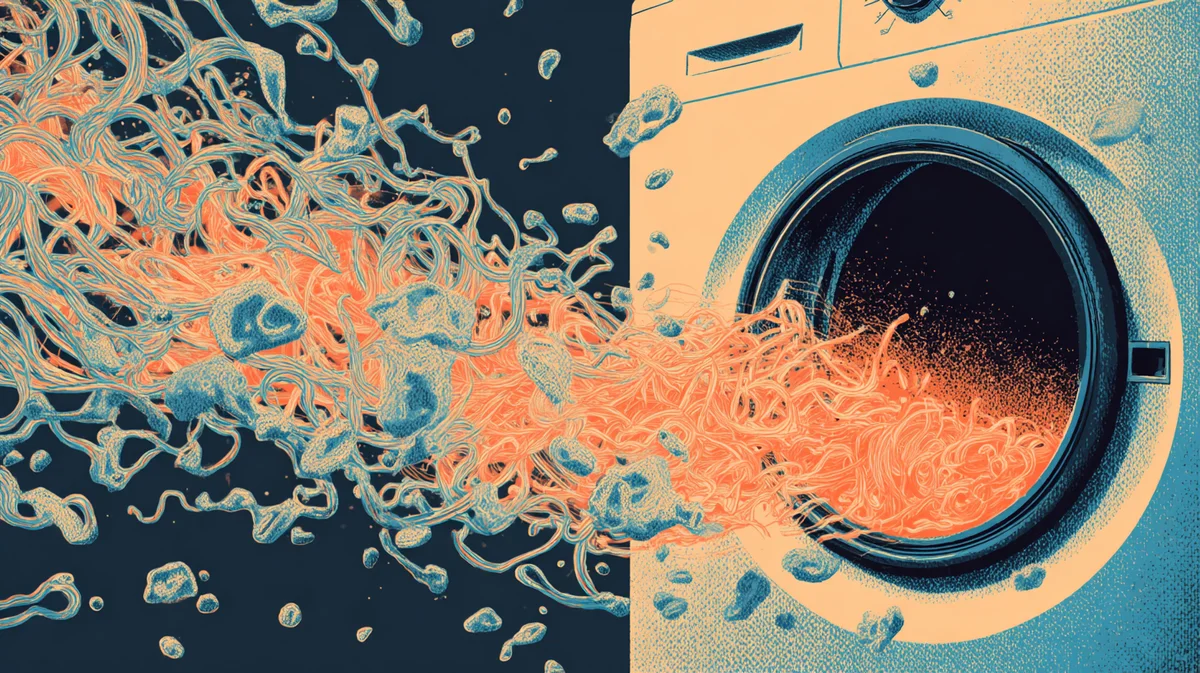
When you take wet, heavy clothing out of the washing machine and throw it into the tumble dryer, you are subjecting the fabric to an extreme environment. A standard electric dryer blasts the garments with sustained, high-heat air while rapidly tumbling them against the hard metal walls of the drum. This combination of intense thermal energy and aggressive friction is highly destructive to woven textiles.
As the clothes tumble over and over, they rub against zippers, buttons, and each other. The heat weakens the integrity of the individual fibers, whether they are natural cotton, wool, or synthetic polyester. The friction then acts like microscopic sandpaper, scraping the weakened fibers right off the surface of the garment. The dryer's exhaust fan pulls these dislodged fibers out of the drum and catches them in the filter. That thick layer of gray fuzz is literally the fabric of your clothing, slowly being burned and ground away.
The Wear-and-Tear Feedback Loop
We often blame the quality of modern clothing when it wears out quickly. We complain that a t-shirt became thin and see-through, that a sweater lost its shape, or that the elastic in our athletic wear snapped and sagged. While cheap manufacturing certainly plays a role, a massive portion of this premature aging is entirely self-inflicted in the laundry room.
This creates a vicious cycle known as the wear-and-tear feedback loop. We buy a piece of clothing, over-wash it, and aggressively tumble dry it. The heat and friction strip away the garment's mass, thinning the fabric and destroying its elasticity. The garment quickly looks old, worn out, and loses its functional appeal. Because it looks degraded, we throw it away and head to the store to buy a replacement, never realizing our drying habits were the true catalyst for its demise.
The Invisible Plastic in Our Oceans
The term 'microplastics' usually brings to mind broken-down water bottles or discarded plastic bags floating in the ocean. However, one of the largest sources of primary microplastics in our marine environments comes straight from our laundry rooms. Synthetic textiles, like polyester, nylon, and acrylic, are essentially extruded plastics spun into yarn.
During a standard wash cycle, the mechanical agitation creates intense friction. This friction physically breaks down the structural integrity of the yarn, causing tiny fibers, known as microfibers, to detach. A single load of laundry can release hundreds of thousands, sometimes millions, of these microfibers into the wastewater stream. Because they are so small, often less than 5 millimeters in length, and frequently microscopic, they do not behave like typical solid waste.
The Infrastructure Gap
You might assume that the water treatment plants in your city filter out this debris before the water is released back into the environment. Unfortunately, municipal wastewater infrastructure was built to handle human waste and organic matter, not microscopic plastic threads.
While modern plants can capture a portion of these fibers in sewage sludge, a vast quantity slips right through the filtration screens.
These microfibers flow directly into rivers, lakes, and oceans. Once in the aquatic environment, they act like tiny chemical sponges. They absorb surrounding pollutants and toxins from the water. Small marine organisms, mistaking these brightly colored fibers for food, ingest them. The plastics and their accumulated toxins then travel up the food web, bioaccumulating in the fish that ultimately end up on our dinner plates (IUCN, 2017). The clothes we wash are directly altering the diet of marine ecosystems.
We are also seeing larger systemic interventions. France, for example, passed pioneering legislation requiring all new washing machines to have built-in microfiber filters. Meanwhile, consumers can purchase after-market attachments or specialized washing bags, like the Guppyfriend, which encapsulate synthetic clothes and catch microfibers before they go down the drain.
References
- International Union for Conservation of Nature. (2017). Primary Microplastics in the Oceans: A Global Evaluation of Sources. IUCN. Source