
Why High Pressure Creates a Heat Lid
Explore the atmospheric mechanism that compresses air and bakes the earth during a heat dome.
A standard summer heatwave might bring a few days of high temperatures before a breeze or rainstorm breaks the cycle. But sometimes, the weather simply stops moving. The sky stays relentlessly clear, the wind dies down, and the heat builds day after day.
People often assume it is just the normal peak of summer, or imagine a literal dome in the sky, but the physics at play are entirely different.
What exactly makes a heat dome hotter than a normal summer heatwave?
The invisible weight of an anticyclone
The engine behind this extreme weather is a dense layer of sinking atmosphere, often called an anticyclone. High pressure pushes massive volumes of air downward toward the surface, preventing it from rising.
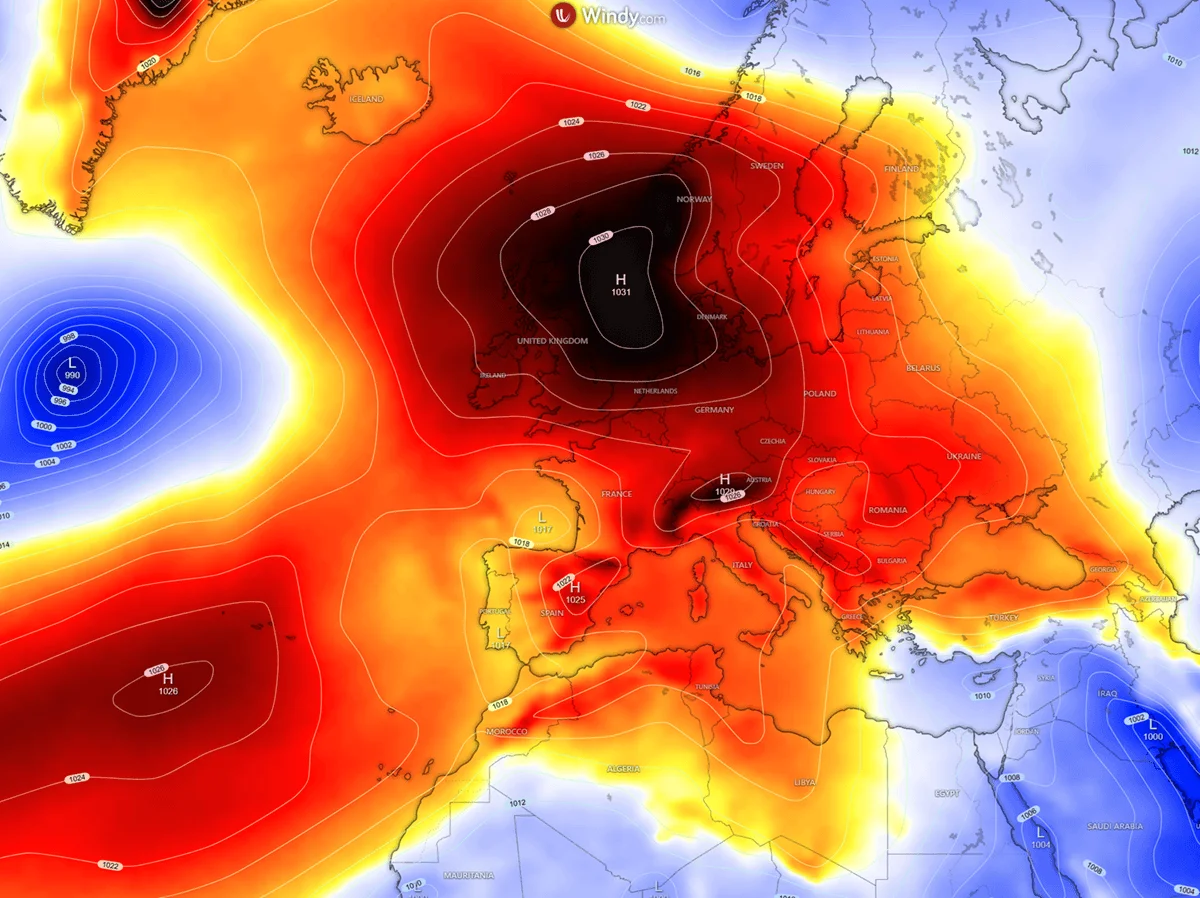
As it gets closer to the ground, this sinking high-pressure system compresses and heats up, much like the air inside a bicycle pump gets warm when you push the handle (WMO, 2023). Because the air is being forced downward, it physically prevents ground-level moisture from rising into the atmosphere to form clouds.
Fact: There is no physical barrier. A heat dome is just a massive, stagnant area of high atmospheric pressure that traps hot air in place like a lid on a pot.
With no cloud cover to reflect the sun, solar radiation beats down continuously. The high pressure creates a stagnant column of air that refuses to budge, locking the sweltering conditions over a specific region for days or even weeks.
The soil moisture feedback loop
As the unshielded sun beats down day after day, it slowly bakes the moisture out of the earth. Under normal summer conditions, evaporative cooling from damp ground lowers the temperature of the surrounding air.
It takes thermal energy to turn liquid water into vapour, so that energy is absorbed rather than heating the air. But once the ground completely dries out, that natural evaporative cooling effect vanishes.
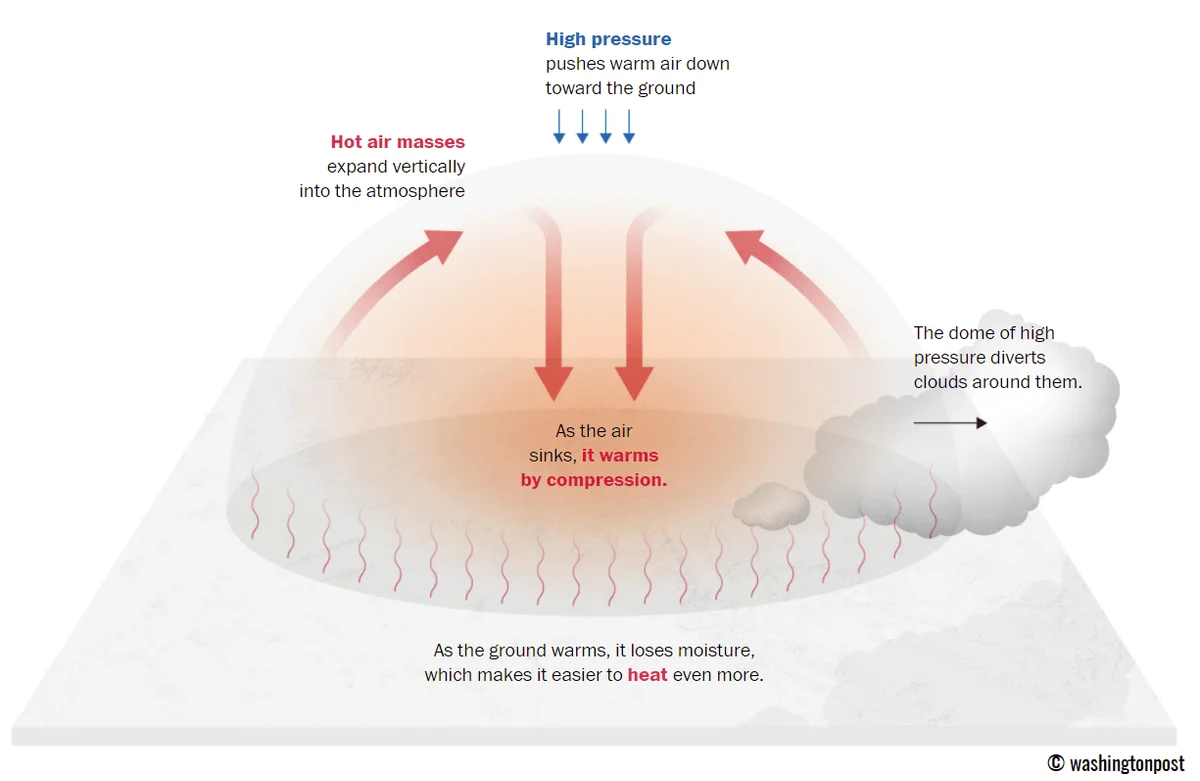
Without moisture to absorb the sun's energy, dry earth radiates heat outward, which rapidly spikes the ambient temperature far above what a normal summer day would produce (IPCC, 2021). The longer the high pressure sits in place, the drier the ground gets, and the hotter the trapped air becomes.
The air conditioning paradox
When outdoor temperatures climb to dangerous extremes, the most immediate survival strategy is to seek out artificial cooling. Air conditioning is a powerful tool that actively prevents heatstroke and saves lives during these intense weather events.
However, relying on fossil-fuelled cooling accelerates future heat domes, creating a deeply problematic cycle (IEA, 2018). The electrical energy required to run millions of residential and commercial air conditioning units at maximum capacity puts immense strain on regional power grids.
Because the majority of global grids still rely on burning fossil fuels, surviving today's heat wave requires emitting massive volumes of greenhouse gases. Those emissions directly contribute to the warming patterns that guarantee more frequent and intense high-pressure weather anomalies in the future.
What to take away
You now know why these stagnant weather patterns are so much worse than a typical sunny day.
- High-pressure systems act like an invisible lid, compressing air downwards and preventing the formation of cooling clouds.
- Once the soil dries out completely, the loss of evaporative cooling causes ambient temperatures to spike dangerously.
- While air conditioning prevents immediate harm, its massive energy demand drives the emissions that cause future extreme heat.
Next, we will explore why humidity and hot nights push human biology past its breaking point.