Reading a Seafood Label Without Getting Fooled
How to evaluate shrimp and seafood purchases at the freezer aisle: what ASC and MSC actually verify, what 'organic' and 'sustainable' do and don't mean, and where reducing frequency beats perfect sourcing.
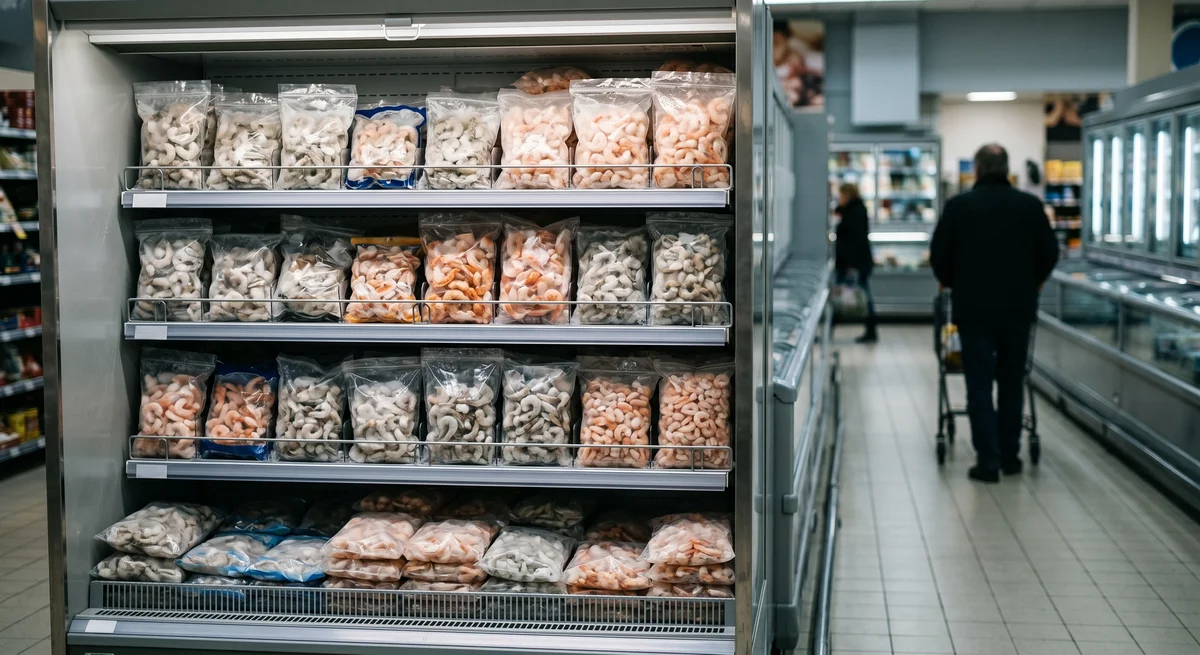
You're at the supermarket. Five different packs of shrimp in the freezer aisle. One says 'farmed in Vietnam, ASC certified.' One says 'wild-caught North Atlantic prawns.' One says 'organic black tiger prawns, produced in India.' One says 'sustainably sourced, product of Ecuador.' One has no claim at all, just a country of origin.
They cost between four and eleven euros. They look almost identical once you cook them.
What does any of that actually mean? Most of those phrases sound like quality signals. Some are. Some are largely marketing.
And the differences matter, for the coastline the shrimp came from, for the carbon that did or didn't get released, and for whether you're voting with your money for the supply chain you think you're supporting.
The two certifications worth knowing
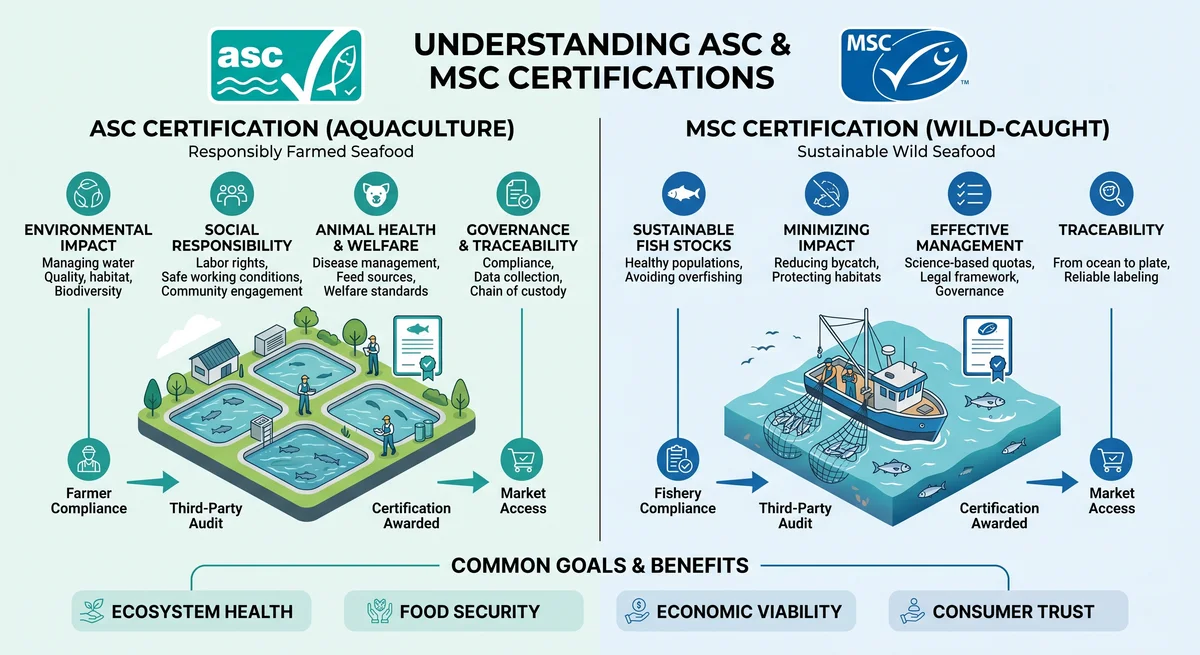
There are dozens of seafood eco-labels in circulation. Two of them carry real audit weight: the Aquaculture Stewardship Council (ASC) for farmed seafood, and the Marine Stewardship Council (MSC) for wild-caught.
ASC, for farmed shrimp
The ASC was created in 2010 by WWF and the Sustainable Trade Initiative. For shrimp, the core rules include no mangrove clearance after May 1999, restoration required to offset historical clearance, and audited limits on water use, antibiotics, feed sourcing, and labour conditions (ASC, 2024). Audits are conducted by independent third parties.
This doesn't undo historical mangrove loss, and certification isn't a guarantee , auditing in remote tropical estuaries is imperfect. But an ASC-labelled pack is meaningfully different from an unlabelled one.
MSC, for wild-caught
The MSC focuses on wild fisheries: stock health, ecosystem impact, and management quality. It is less directly about mangroves, but for wild-caught shrimp specifically, an MSC label is the best available signal that the fishery has been independently assessed (MSC, 2024).
What 'organic' and 'sustainable' actually mean
This is where labels get noisy and the marketing budget starts to outweigh the audit budget.
'Organic'
For shrimp, 'organic' typically refers to feed ingredients, antibiotic restrictions, and water quality at the pond , not to whether the pond was once a mangrove forest. An organic-certified shrimp farm built on cleared mangrove in 2005 can be perfectly organic-compliant. The two questions don't overlap as much as the marketing implies.
Fact: Organic standards cover feed, antibiotics, and pond water quality. They generally don't ask whether the pond was once a mangrove forest. The two labels measure different things.
'Sustainable'
The word 'sustainable' on a shrimp pack is almost always unregulated. No agency reviews it. No audit backs it up. It can mean a real internal sourcing programme, or simply a graphic designer's choice. Treat it as a starting question , 'sustainable how, verified by whom?' , not as an answer.
The shrimp with no mangrove footprint
Cold-water shrimp , caught in the North Atlantic, North Sea, or the cold Pacific , come from outside the tropical mangrove belt entirely. They are typically wild-caught and a different species (Pandalus borealis and relatives).
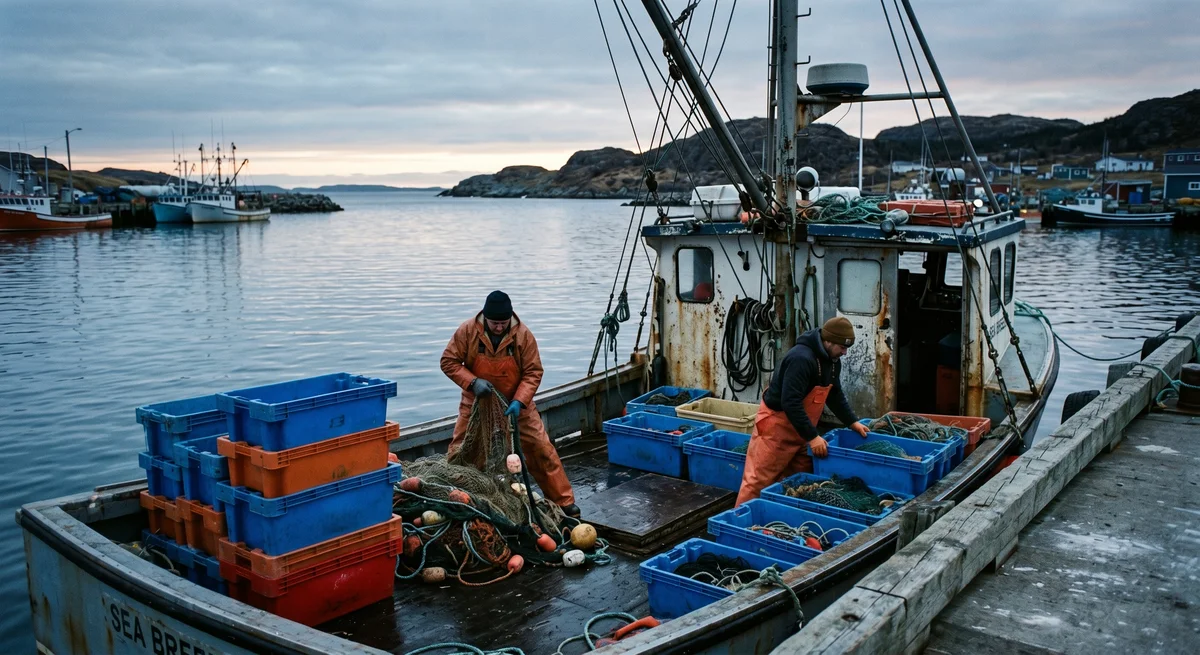
This is not a perfect option. Cold-water trawling has its own concerns, including fuel use and bycatch. But the mangrove footprint is genuinely zero, because the species lives nowhere near a mangrove.
One thing worth noting: cold-water shrimp tastes different , smaller, sweeter, less elastic , and is usually pricier. It's a substitute, not a clone.
A simple decision filter
Three questions filter out most of the noise. They take about five seconds at the counter or in front of the freezer.
Before buying a pack of shrimp or prawns, check:
- What species and country? (Cold-water wild species are a different supply chain entirely.)
- If farmed , does it carry an ASC certification?
- If wild-caught tropical , does it carry an MSC certification?
Two yeses and you've meaningfully reduced your mangrove exposure. Zero yeses doesn't mean the product is necessarily bad , but you're flying blind on sourcing.
The honest part: less can outweigh perfect
One thing the certification conversation tends to obscure. The single biggest variable in your shrimp impact is how often you eat it. A perfectly sourced ASC shrimp dinner every week has a larger total footprint than an unsourced shrimp dinner twice a year.
Certifications matter , they ratchet the whole industry upward over time as more buyers demand them. But for one household's footprint, frequency and portion size are doing most of the work.
What this means for you
You can now read a shrimp label without being fooled. Most of the work is noise filtering.
- ASC and MSC are the two certifications with real audit weight; treat the rest with caution.
- 'Organic' for shrimp covers feed and antibiotics, not whether the pond was once mangrove.
- 'Sustainable' without a named certification or audit is usually marketing, not a verified claim.
- Cold-water shrimp from temperate seas has no mangrove footprint at all.
- Eating shrimp less often is the biggest single change available to most households.
Up next: the same skill, applied to mangrove restoration projects and carbon offsets.