
Gas stoves and indoor cooking spikes
Identify the specific cooking methods and appliances that generate the highest levels of indoor respiratory hazards.
The kitchen is the centre of domestic life, filled with the familiar sounds of sizzling pans and boiling water. We associate the smell of browning butter or roasting vegetables with comfort and nourishment.
However, those same appealing aromas often mask intense chemical reactions happening right at the burner. Both the fuel used to create the heat and the food being heated release intense bursts of invisible airborne chemicals. How much pollution does everyday cooking and frying actually create?
The dual threat of the gas burner
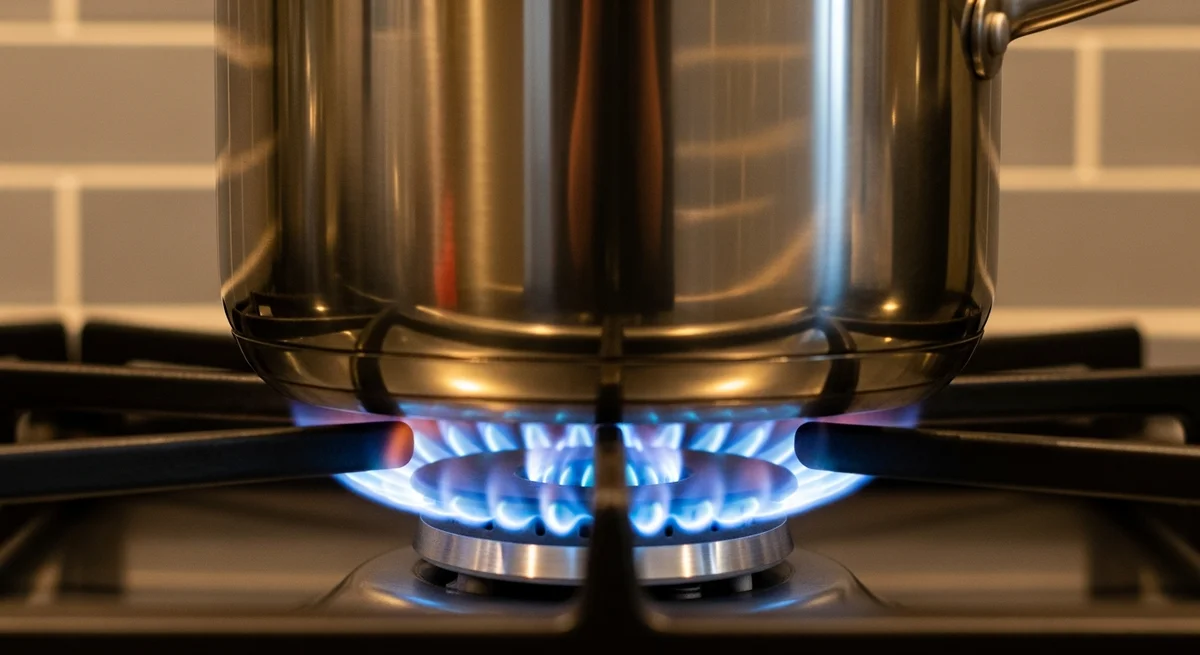
A kitchen stove acts as a significant point-source pollution hazard. Gas stoves present a unique, twofold problem because they require burning a fossil fuel directly inside the living space.
Whenever a gas burner is ignited, it produces nitrogen dioxide (NO2) and carbon monoxide as byproducts of the flame itself, entirely independently of what is in the pan. Because these reactive gases are invisible and largely odourless, unvented gas combustion inflames airways without leaving obvious visual clues in the room (Environmental Protection Agency, n.d.). A person boiling a simple pot of water on a gas stove is still breathing in inflammatory NO2 emissions.
Burning the food
The second half of the cooking threat comes from the food itself. Heating oils, fats, and proteins to high temperatures breaks them down into complex volatile organic compounds and fine particulate matter (PM2.5).
Frying and searing generate exponentially more particles than boiling or steaming. When cooking oils hit their smoke point, high-heat cooking sharply multiplies fine particle counts, sometimes pushing local air quality into hazardous ranges for hours after the meal is served (Lawrence Berkeley National Laboratory, n.d.). The more intense the heat and the more fat involved, the greater the particulate spike.
When renters are left without a switch
Managing kitchen pollution is rarely as simple as buying a new appliance, which creates a significant equity gap in clean air. Property owners can upgrade to clean-running electric induction stoves, but tenants are almost always stuck with whatever appliance the landlord installed.
Furthermore, many apartment kitchens feature recirculating hoods that merely blow air through a flimsy grease filter before pushing it back into the room. Because these recirculating fans lack an exhaust pipe to the outdoors, they fail to remove reactive gases like NO2, leaving renters heavily exposed to the stove's toxic emissions (Chan et al., 2020). In these situations, tenants must rely on opening windows and running standalone air purifiers during meals.
The key takeaways
Cooking is unavoidable, but the invisible emissions it creates require management.
- Gas stoves emit inflammatory nitrogen dioxide whenever the flame is on, regardless of what is cooking.
- Frying and high-heat searing release large spikes of fine particulate matter from breaking down oils.
- Recirculating range hoods do not vent gases outside, leaving apartment dwellers at higher risk.
- Look up whether your range hood vents outdoors or simply recirculates before trusting it to clear cooking fumes.
With the sources of indoor pollution identified, you can now start actively defending your space.
References
- Environmental Protection Agency, n.d. Indoor Air Quality (IAQ). Source
- Lawrence Berkeley National Laboratory, n.d. Indoor Environment Group, Indoor Air Quality Research. Source
- Chan, W. R., et al., 2020. Simulations of Short-Term Exposure to NO2 and PM2.5 to Inform Capture Efficiency Standards. Source