The Great Pacific Garbage Patch
 Life Below Water
 Clean Water And Sanitation
 Responsible Consumption
Uncover the reality of the world's largest ocean plastic accumulation and learn how systems-level changes can protect marine ecosystems.
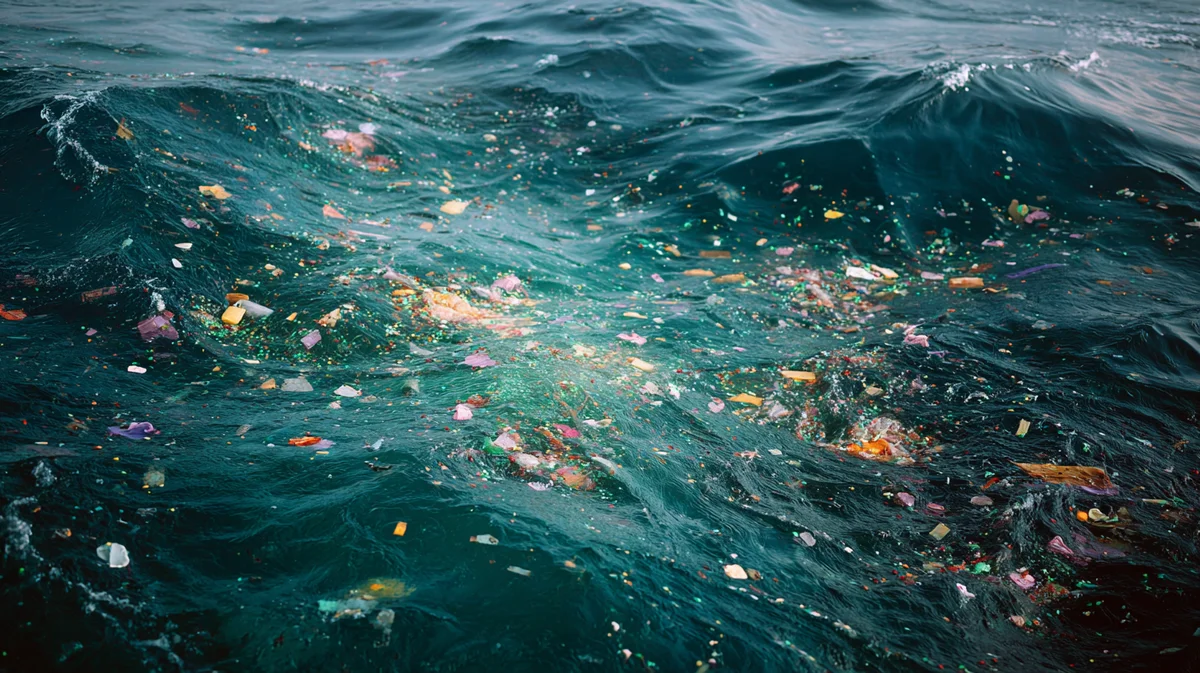
The Great Pacific Garbage Patch is often imagined as a floating island of trash you could walk on, but the reality is far more complex and dangerous. It is a massive "soup" of suspended microplastics and discarded fishing gear, trapped by powerful ocean currents. In this challenge, you will dive into the science of how this patch formed and why plastic is uniquely persistent in our oceans.
You will explore the hidden pathways where plastic enters the food chain, threatening both marine life and human health. By looking beyond simple cleanup myths, you will discover the roles of circular design, policy, and individual habits in stopping plastic at the source. Get ready to shift your perspective from visible litter to the invisible systems that drive global pollution.
Learning Goals
The Invisible Giant
When we talk about the Great Pacific Garbage Patch (GPGP), many people imagine a solid mass of land you could walk on, perhaps even plant a flag in. However, the reality is far more subtle and, in many ways, more dangerous.
This module takes you deep into the North Pacific Subtropical Gyre to understand the physics of the 'vortex' and the chemistry of why plastic never truly goes away. You will learn to distinguish between popular myths and scientific facts, setting the stage for exploring the broader environmental impacts on our planet.
The Physics of the Patch
The Immortal Material
A Tangled Web
Understanding the Great Pacific Garbage Patch requires looking beyond the floating debris to see the biological ripple effects that extend throughout the ocean. In this module, you will investigate how tiny microplastics become toxic delivery vehicles for marine life and why large-scale 'ghost gear' remains a persistent physical threat to biodiversity. By exploring the connections between ocean health and human food security, you will see why the health of the North Pacific is directly linked to your own plate and community health.
The Bioaccumulation Trap
Ghost Gear and Physical Threats
From Source to Solution
Stopping the growth of the Great Pacific Garbage Patch requires more than just high-tech nets in the middle of the ocean. It requires a shift in how we design, use, and dispose of materials on land. In this module, you will trace the pathways plastic takes from your laundry room and local storm drains to the high seas.
You will also explore the circular economy and the global policies designed to hold manufacturers accountable, moving the focus from downstream cleanup to upstream prevention. By the end of these lessons, you will see how community action and industrial innovation work together to close the tap on ocean plastic.